
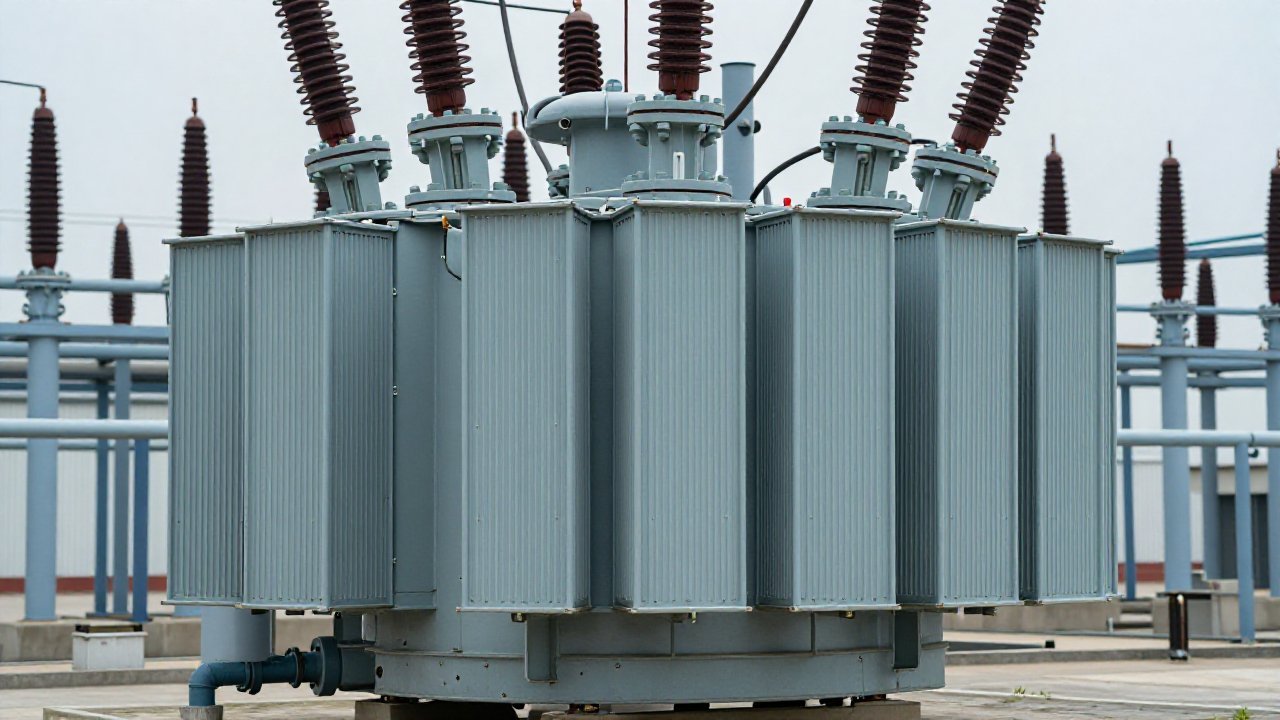
On 26 August 2026 the Metropolitan Electricity Authority of Thailand published a tender to measure partial discharge (PD) on 50 power station transformers using a portable online testing method, estimated at THB 1,070,000 (tender notice, third-party listing). Fifty units is the scale at which the complaint “PD testing system not portable” stops being a grumble and becomes a scheduling problem — a campaign moves only as fast as its slowest site.
The market is responding in the obvious direction. Megger’s ICMneo packs four channels and about five hours of battery into a portable unit designed to IEC 60270 (vendor data), and handheld detectors now combine transient earth voltage (TEV), UHF, acoustic and high-frequency current transformer (HFCT) channels with a working day of runtime (vendor data). Runtime and channel count are the levers a portable instrument can move. Neither helps when the site has nothing to plug into.
Four Field Constraints That Decide What You Can Buy
| Constraint | Why a portable campaign stalls | What to specify instead |
|---|---|---|
| No local mains supply | A generator and a charging plan become part of every visit; runtime becomes the campaign’s clock | A permanent unit supplied from the station cabinet it already has |
| No coupling device on site | UHF and HFCT channels need a coupling path that existing ports may not offer | A drain-valve UHF coupler on the existing sealed port; HFCT clamped on the earth connection |
| No PD specialist on shift | Phase-resolved pattern reading needs a trained eye at the moment of measurement | Cross-channel comparison with alarms set against a per-unit baseline |
| Intermittent defect | Ten minutes on site can be ten quiet minutes | Continuous capture, so the 03:00 event is recorded rather than missed |
The fourth row cannot be bought around. PD responds to load, thermal cycling and switching transients, so any method that measures only while a crew is present samples the defect’s quiet periods as often as its loud ones. State Grid Xinjiang reported completing an on-site PD test on a 750 kV shunt reactor from an integrated platform on 5 September 2026 (trade press report) — the direction of travel is permanent instrumentation, not a better carrying case.
Why is a PD testing system not portable enough on remote sites?
Almost always because the site, not the instrument, is the limiting factor. A generator plus a battery budget turns a two-hour measurement into a day of logistics, and every hand-carried coupler has to be re-characterised before two sites can be compared. Where a drain valve exists, a fixed UHF coupler removes both problems: it draws from the cabinet the station already has, and its coupling path never changes between visits (oil-valve UHF retrofit guide).
Can a permanent PD monitoring system be installed without an outage?
Yes, when the sensors are chosen for it. Drain-valve UHF couplers and HFCT clamps on the earth connection both install on an energised unit, and the drain-valve route uses a sealed port that already exists, with no oil handling. Anything needing a manhole opened requires an outage, so sensor type — not price — sets the installation cost (diagnostic methods).
The Measurement Still Has to Be Trustworthy Wherever It Is Taken
Moving the measurement does not relax the physics. Apparent charge in picocoulombs is defined for a particular measurement circuit under IEC 60270:2025, published 5 June 2025 and renamed Charge-based measurement of partial discharges. The methods that travel well — electromagnetic and acoustic sensing — fall under IEC TS 62478:2016, adopted identically as GB/T 42287, while DL/T 1498.1 covers online monitoring devices as a class. IEEE Std C57.127 addresses acoustic detection only and cannot justify a UHF or HFCT channel. None of these type-tests an instrument: “designed to IEC TS 62478” describes a method, not a certificate. The map is under technology standards, the channel comparison under partial discharge detection methods.
When Permanent Instrumentation Replaces the Trip
The TPD-400 is a permanent IED with four sensing inputs: UHF couplers (300–1500 MHz, oil valve or manhole), HFCT (0.3–30 MHz, earth connection), acoustic sensors (80–200 kHz, tank wall) and RF. It samples at 125 MS/s with 14-bit resolution, synchronises channels to better than 100 ns, resolves apparent charge to roughly 5 pC, withstands 600 kV lightning impulse on the sensing path, and operates over −30 to 60 °C from an AC 220 V local cabinet (vendor data). It communicates over IEC 61850 (DL/T 860) and Modbus, and is designed in line with IEC TS 62478 / GB/T 42287 and DL/T 1498.1.
Because four channels observe one defect through different physics, the output that survives the absence of a specialist is the cross-channel comparison, not any single reading (PD versus DGA). On the gas side, DGA-900 covers multi-gas analysis and moisture for units where a fault type has to be named.
PAS DGA for PD Monitoring Where the Site Is the Constraint
If a PD testing system not portable enough for your sites is the constraint you are specifying around, start from the installation drawing rather than the price list. The TPD-400 channel plan, sensor options and cabinet requirements are in the product manuals. Tell us the unit ratings, the drain-valve type and whether the station cabinet has a spare AC 220 V circuit and we will return a channel plan — contact us to start.
Sources
- Metropolitan Electricity Authority (Thailand), tender to measure partial discharge using the portable online testing method for 50 power station transformers, published 26 August 2026, estimated THB 1,070,000 (tender notice, third-party listing).
- Megger ICMneo portable partial discharge measurement system, manufacturer specification, accessed 26 September 2026 (vendor data).
- Handheld multi-physics PD detector data combining TEV, ultrasonic, UHF and HFCT channels with PRPD/PRPS capture, 2026 (vendor data).
- State Grid Xinjiang, on-site partial discharge test on a 750 kV shunt reactor from an integrated test platform, 5 September 2026 (trade press report).
- IEC 60270:2025 (Ed. 4.0), 5 June 2025. IEC TS 62478:2016 (= GB/T 42287). DL/T 1498.1, online monitoring devices. IEEE Std C57.127, acoustic detection only.
- TPD-400 technical data, pasdga.com/products/tpd-400/, accessed 26 September 2026 (vendor data).