
DGA Products — Online Monitors & Hydrogen Sensors
Complete dissolved gas analysis solutions for transformer condition monitoring — from fleet-wide hydrogen sensors to comprehensive 7-gas Laser Photoacoustic Spectroscopy. Every order receives a personalized quotation, application review, and dedicated engineering support.
Key figures at a glance
- The DGA-700 reports on a configurable cycle from 10 minutes to 24 hours; the DGM-900 measures continuously with no operator involvement.
- Palladium-alloy hydrogen sensors hold ±15% of reading or ±5 ppm accuracy (DGA-200 and DGA-500; ±20% or ±2 ppm for the DGA-300) with no routine calibration.
- The laser photoacoustic (LPAS) detection cell uses no carrier gas, no columns and no consumables.
Start here — choose by what you need
OEM components
Palladium-alloy hydrogen sensing elements for system integrators. Full register map and integration documentation under NDA.
Complete instruments
Wall-mount and cabinet units: DGA-200 / DGA-500 hydrogen sensors, DGA-700 compact multi-gas, DGM-900 seven-gas L-PAS.
Distribution & white label
Regional exclusivity, private-label and OEM/ODM terms for distributors and EPCs.
Replacement & upgrade
Replace end-of-life hydrogen sensors and add monitoring to transformers already in service.
Two Product Families, One Technology Platform
PAS DGA offers two complementary product families built on proprietary sensing physics — single-gas hydrogen monitors for cost-effective fleet coverage, and a laser photoacoustic multi-gas analyzer for compliance-grade protection of critical assets. Both families share the same MODBUS RTU (RS-485) / 4–20 mA interface and the same zero-consumable service philosophy, so a utility can standardize on one platform while matching each transformer’s risk profile to the right sensor class. Hydrogen sensors are the economical early-warning layer; the DGM-900 delivers full gas speciation when a fault’s exact nature matters.
 Multi-Gas
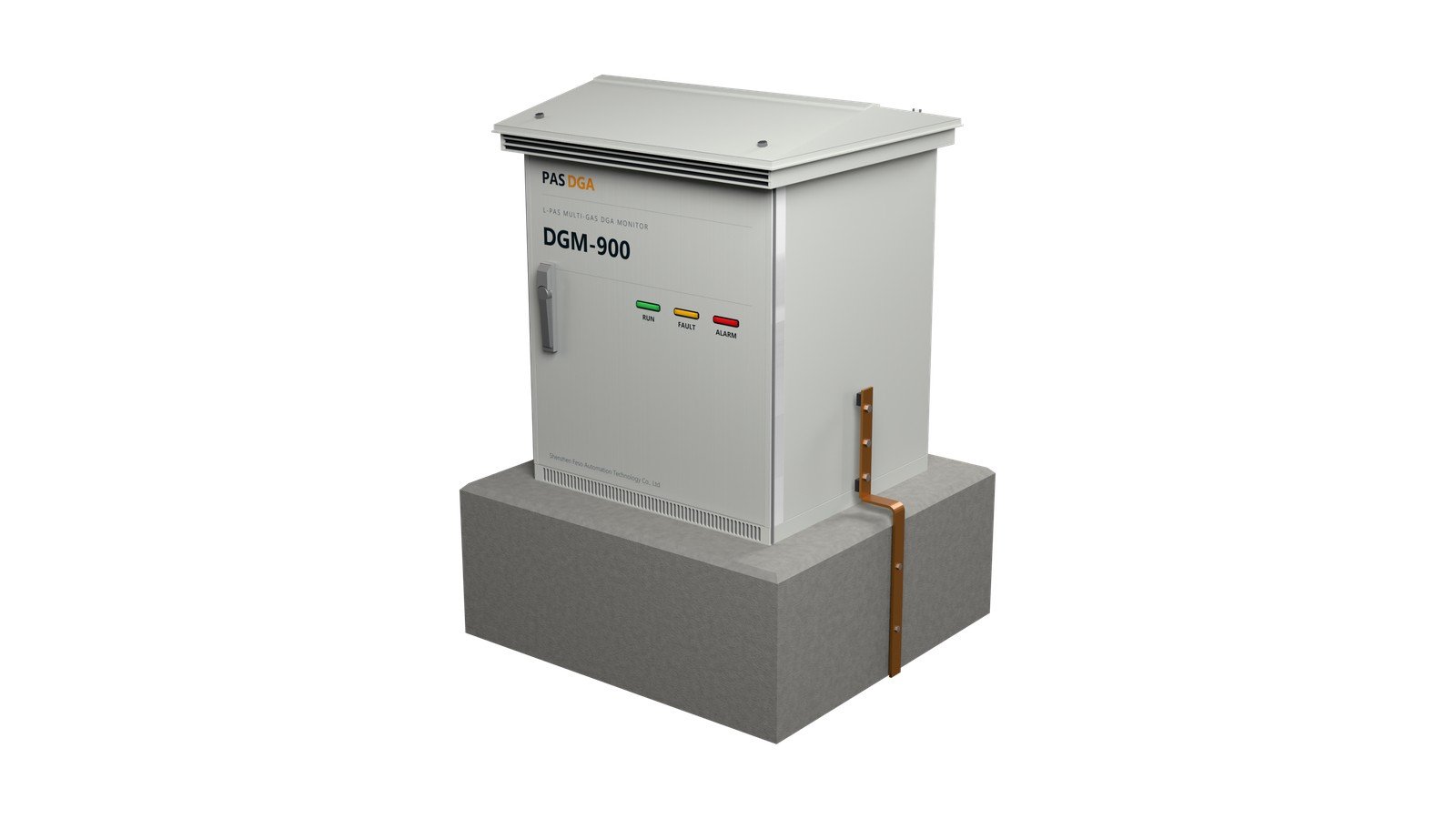
DGM-900 — Multi-Gas DGA
Laser Photoacoustic Spectroscopy — 7 Gases + Moisture
Laboratory-grade comprehensive DGA in real time. 7 fault gases plus moisture via Laser Photoacoustic Spectroscopy (LPAS). 0.1 ppm C₂H₂ detection. Deployed at China’s 1000 kV UHV substations and ±800 kV HVDC converter stations. Because LPAS measures absorbed light energy directly, the analyzer needs no carrier gas, no chromatography columns, and no routine calibration — only a three-year preventive maintenance cycle. Three configuration modes let you match price to criticality.
- 7 Gases + Moisture
- 0.1 ppm C₂H₂
- IEC 61850 + MODBUS
- Duval / Rogers / Doernenburg
- 1 min Sampling Interval
- Comprehensive Warranty
 3 Models
Hydrogen Sensors
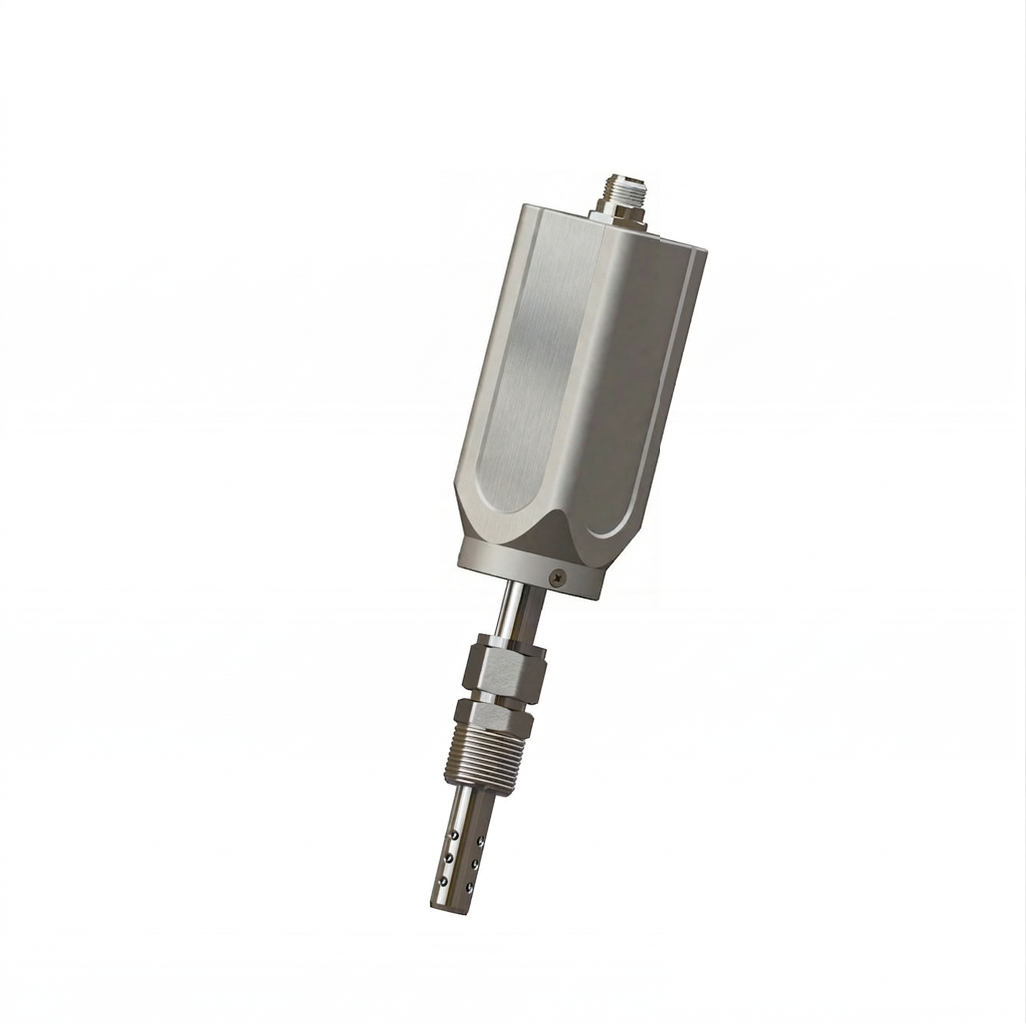
Pd Alloy Thin-Film — DGA-200 / 300 / 500 Series
Online hydrogen monitoring built on a palladium alloy thin film that sits directly in the transformer oil — no carrier gas, no membrane to clog, no permeation lag. Choose the embedded OEM sensor for multi-gas DGA systems (DGA-300, 2 ppm detection limit), the standalone sensor mounted at the transformer valve (DGA-500, 5–5,000 ppm), or the integrated monitoring unit that also measures moisture and oil temperature (DGA-200).
- 2 ppm Detection (DGA-300)
- 5–5,000 ppm Range
- RS-485 / MODBUS RTU
- 4–20 mA + relays (DGA-200 only)
- IP66 (DGA-200) / IP67
- 10-Year Sensor Life
- Zero Consumables
New — DGA-700 Compact Multi-Gas DGA Monitor
H₂ + CO + moisture-in-oil in a lightweight 10 kg valve-mount package, with optional acetylene (C₂H₂). Photoacoustic spectroscopy, 10-minute measurement cycle, IP55, IEC 61850 / Modbus. The cost-effective multi-gas layer between single-gas hydrogen sensors and the 7-gas DGM-900.
New — TPD-400 Transformer Partial Discharge (PD) Monitoring
Multi-sensor on-line PD monitoring for 110 kV+ oil-immersed transformers — UHF (300–1500 MHz), RF, AE and HF (HFCT) in one system. 5 pC sensitivity, 600 kV flashover withstand, 125 MS/s·14-bit synchronous IED, PRPD/PRPS expert diagnostics. Installed live; pairs with DGA for combined transformer condition monitoring.
Hydrogen Sensor vs Multi-Gas DGA — At a Glance
| Specification | Hydrogen Sensor (DGA-200/300/500) | DGM-900 Multi-Gas |
|---|---|---|
| Gases measured | H₂ | H₂, CO, CO₂, CH₄, C₂H₂, C₂H₄, C₂H₆ + moisture O₂, N₂ optional |
| Detection limit | 2 ppm (DGA-300) / 5 ppm (DGA-500) | 0.1 ppm C₂H₂ / 0.5 ppm H₂ |
| Measurement principle | Pd alloy thin-film, direct immersion | Laser Photoacoustic Spectroscopy (LPAS) |
| Carrier gas / consumables | None | None |
| Communications | MODBUS RTU (RS-485); 4–20 mA on DGA-200 only | IEC 61850, MODBUS |
| Diagnostic methods | H₂ trending + rate of rise | Duval / Rogers / Doernenburg / IEC & IEEE ratios |
| Typical install | Valve-mount (DGA-500) or wall-mount at the sampling valve (DGA-200) | Valve or circulation loop, ~1 day |
| Best fit | Distribution & industrial fleets | Transmission, GSU, HVDC, nuclear |
Full datasheets, dimensional drawings, and site-survey checklists are provided with every quotation.
Which product fits your transformer fleet?
There is no single “best” DGA monitor — only the right sensor for a given asset’s criticality, fleet size, and budget. The three paths below cover the decisions most operators face.
Choose Hydrogen Sensors when…
…you monitor a large fleet of distribution and industrial transformers. Hydrogen is generated in every transformer fault type, so hydrogen trending provides the highest diagnostic value per dollar. Valve-mount installation, zero maintenance, and the lowest total cost of ownership.
Choose the DGM-900 when…
…you protect critical assets — transmission transformers (≥220 kV), generator step-up units, HVDC converter transformers, or nuclear facility transformers. Full gas speciation enables precise fault-type identification (thermal vs. electrical, oil vs. paper) for compliance-grade monitoring.
Start with H₂, migrate to multi-gas…
…as a risk profile evolves. Many utilities roll out hydrogen sensors fleet-wide first, then upgrade critical units to the DGM-900. Both families report into the same SCADA/EMS workflow, so a staged migration requires no change to your data pipeline.
Technology Highlights
Palladium Alloy Thin-Film
Our hydrogen sensors use a proprietary palladium-alloy thin film that is immersed directly in the transformer oil — no membranes, no carrier gas, no permeation lag. The film’s electrical resistance changes reversibly with dissolved hydrogen concentration, giving a 2 ppm detection limit on the DGA-300 and a 10-year service life.
Laser Photoacoustic Spectroscopy
The DGM-900 uses a tunable quantum-cascade laser and a resonant photoacoustic cell to measure 7 fault gases plus moisture in real time. Because LPAS measures absorbed light energy rather than a secondary carrier gas, it needs no columns and no consumables — while reaching 0.1 ppm acetylene detection.
Zero-Consumables, Zero-Carrier-Gas Architecture
Both families share the same operational philosophy: no calibration gases, no spare-part kits, no maintenance windows for membrane replacement. The result is a 10-year total cost of ownership far below traditional GC-based online analyzers — see our 10-year TCO comparison for the figures.
Applications
Power Utilities
Transmission, distribution, and substation transformers — from 110 kV to 1000 kV UHV.
Industrial & Commercial
Steel, petrochemical, cement, mining, and data-center main transformers.
Renewables
Wind, solar, and hydro station transformers — including offshore platforms.
Critical Infrastructure
Nuclear plant transformers, HVDC converter stations, generator step-up units.
Quick Inquiry
Not sure which product you need? Tell us about your application and our team will respond within 1 business day.
Explore DGA Technology & Applications
DGM-900 Multi-Gas Monitor
Full Product Catalogue & Datasheets
DGA Monitor Product Selector
Accessories & Mounting Kits
How PAS Works
Pd Thin-Film Sensor Technology
Hydrogen vs Multi-Gas DGA
Online vs Offline DGA
DGA Fundamentals
DGA Diagnostic Methods
Power Utility Applications
Industrial Applications
H₂ Sensors & the 2026 Compliance Rule
DGA Sensor Technologies Compared
7-Dimension Selection Framework
Hydrogen Early-Warning Guide
10-Year TCO Comparison
1000 kV UHV Monitoring
Image credits: Wikimedia Commons (CC BY-SA) — placeholder photography. Product photographs and detailed specifications available on request.
How to choose the right DGA monitor for your transformer
- Step 1: Decide the gas coverage — hydrogen-only monitors give low-cost early warning; multi-gas monitors identify fault type and severity.
- Step 2: Match the measurement cycle to the risk — intervals range from 10 minutes (fast-developing faults) up to 24 hours (default 4 hours).
- Step 3: Confirm the installation — monitors mount on the transformer sampling valve with a universal adapter (DN15–DN32); no carrier gas is required.
- Step 4: Check integration — confirm the model’s interface (MODBUS RTU / RS-485 and 4–20 mA are standard) matches your SCADA or DCS.
- Step 5: Balance budget and enclosure — compare compact valve-mount units with full multi-gas systems and their IP ratings.
FAQ
Q: What gases does a DGA monitor detect?
A: The DGM-900 measures 7 fault gases plus moisture as standard: hydrogen (H₂), carbon monoxide (CO), carbon dioxide (CO₂), methane (CH₄), ethane (C₂H₆), ethylene (C₂H₄), acetylene (C₂H₂) and moisture (H₂O). Oxygen (O₂) and nitrogen (N₂) are available as optional channels — nitrogen is a calculated value and applies to free-breathing transformers only. The DGA-200/300/500 hydrogen sensors detect H₂ down to 2 ppm.
Q: How often should DGA monitoring be performed?
A: IEC and IEEE standards recommend: (1) Critical transformers (GSU, >200 MVA, >220 kV): continuous online monitoring with hourly measurements; (2) Transmission transformers (66–220 kV): annual offline DGA minimum, online recommended; (3) Distribution transformers (