
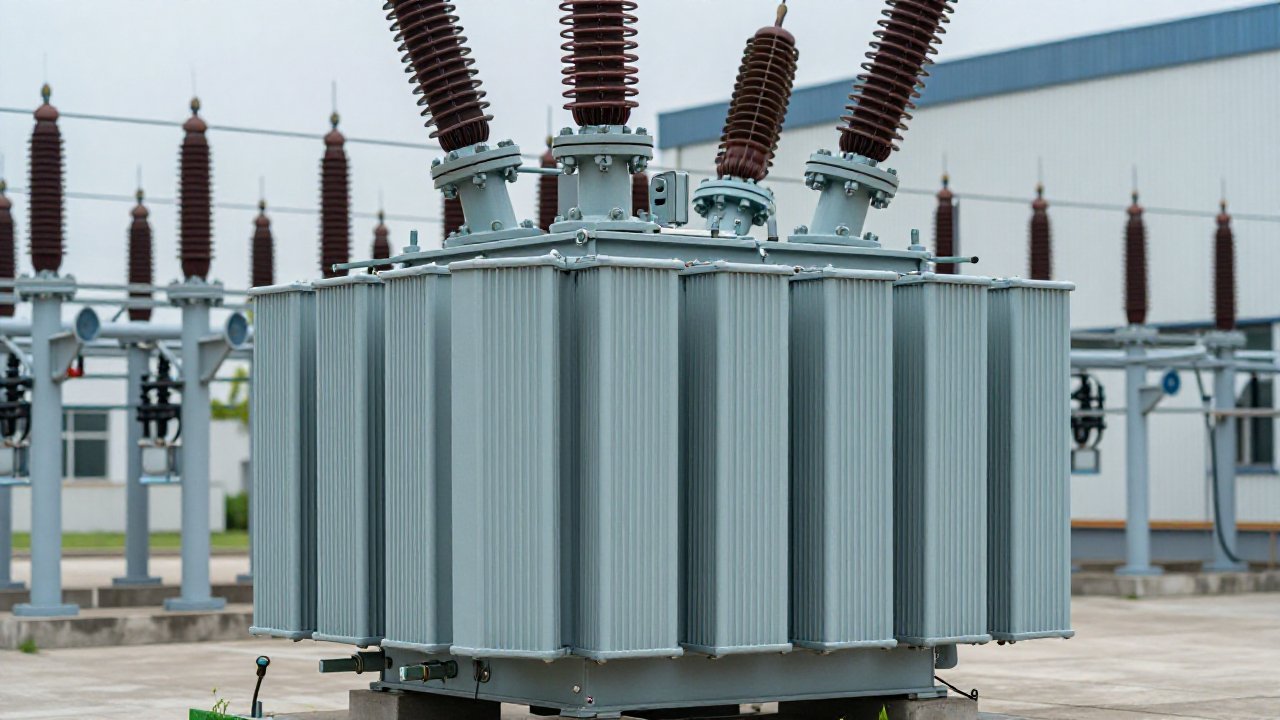
Teledyne FLIR unveiled the Si2a-PD at Electric & Power Indonesia 2026 — a fixed-mount acoustic camera for continuous partial discharge monitoring, with 124 microphones across 2–130 kHz and IP66 sealing, vendor data. The news is not the microphone count: a maker of handheld PD cameras has put the measurement on a pole and left it there. That step, from survey tool to transformer PD monitoring system, is what changes the specification.
That specification is written long before the first quote arrives.
A Survey Answers a Question; a System Watches a Trend
Partial discharge is intermittent: it appears under load, thermal cycling and switching transients, and is often absent during the ten minutes someone stands in front of the transformer. A survey reports what happened during the visit — useful, and incomplete. A permanent system reports what happened at 03:00 on the night the load peaked, and its value is the sequence: whether the rate is rising, whether it tracks load or oil temperature, whether a bushing quiet in March is audible in September. Trend is the product; a unit storing only the current value is a survey with a longer cable.
Four Specifications to Fix Before Comparing Prices
| Specification | Why it changes the outcome |
|---|---|
| Coverage and bandwidth | In-oil UHF (300–1500 MHz) and airborne acoustic sensing are different physics. Alarms that never record which channel answered them cannot be re-read. |
| Channel synchronisation | Three-phase comparison and time-difference location collapse if channels drift. Sub-100 ns makes cross-channel comparison meaningful. |
| Minimum detectable charge | Usually quoted with no measurement path attached. Ask for the figure with its coupler, calibration method and bandwidth. |
| Communication | IEC 61850 (DL/T 860) or Modbus decides whether data reaches the SCADA historian or a vendor portal nobody logs into. |
Two deserve more than a table row. Synchronisation is the one buyers most often skip, because it looks like internal engineering rather than a purchasing decision — until a cross-channel comparison produces a pattern matching no known defect class. Apparent charge is the other: it is defined only for a particular measurement circuit and calibration arrangement, the explicit direction of IEC 60270:2025, published 5 June 2025 and renamed Charge-based measurement of partial discharges.
What the Standards Cover, and What They Do Not
Four standards govern the field, and they differ. IEC 60270 covers conventional charge-based measurement in the laboratory; IEC TS 62478:2016 covers non-conventional online methods using electromagnetic and acoustic sensing, GB/T 42287 adopting it identically; DL/T 1498.1 covers online monitoring devices as a class; IEEE Std C57.127 covers acoustic detection only, and cannot justify a UHF or HFCT channel. None certifies an instrument — “designed to IEC TS 62478” describes a method, not a type test.
Can a PD monitoring system be installed without taking the transformer out of service?
Yes, when the sensors are chosen for it. Drain-valve UHF couplers and HFCT clamps on the earth connection both install on an energised unit, and the drain-valve route uses a sealed port that already exists, with no oil handling. Anything needing a manhole opened requires an outage, so sensor type decides the installation cost. The oil-valve approach is in the oil-valve UHF retrofit guide.
What is the difference between apparent charge in pC and the dB readings an online system reports?
They are not convertible, and a supplier offering a conversion factor is guessing. Apparent charge in pC is defined by a specific circuit under IEC 60270; online UHF, HFCT and acoustic channels report amplitude in their own units over their own bandwidth. The honest basis for an alarm is deviation from a baseline established on that unit.
How TPD-400 Is Specified
The TPD-400 is a permanent IED with four sensing inputs: UHF couplers (300–1500 MHz, oil valve or manhole), HFCT (0.3–30 MHz, earth connection), acoustic sensors (80–200 kHz, tank wall) and RF. It samples at 125 MS/s with 14-bit resolution, synchronises channels to better than 100 ns, resolves apparent charge to roughly 5 pC, and is designed to withstand 600 kV lightning impulse on the sensing path, over −30 to 60 °C ambient, from an AC 220 V local cabinet (vendor data). It communicates over IEC 61850 (DL/T 860) and Modbus, and is designed in line with IEC TS 62478 / GB/T 42287 and DL/T 1498.1.
Because four channels observe one defect through different physics, the useful output of a transformer PD monitoring system is the cross-channel comparison, not any single channel. PD versus DGA in transformer monitoring covers how electrical and gas-side evidence combine, and bushing partial discharge monitoring is one source permanent instrumentation catches more reliably than a visit. On the gas side, DGA-900 handles multi-gas analysis and the sensor technology comparison sets out platform differences. Alarm-setting practice is in alarm threshold and trending; monitoring software shows how trend records reach operations. Products are under TPD-400, fleet rollout under power utility applications, and contact us with your unit ratings for a channel plan.
Sources
- Teledyne FLIR, “Si2a-PD” fixed-mount acoustic imaging camera specification, flir.com, accessed 22 September 2026 (vendor data).
- Teledyne FLIR Si2a-PD unveiling, Electric & Power Indonesia 2026 (trade press report).
- IEC 60270:2025 (Ed. 4.0), Charge-based measurement of partial discharges, 5 June 2025. IEC TS 62478:2016, Measurement of partial discharges by electromagnetic and acoustic methods (= GB/T 42287).
- DL/T 1498.1, online monitoring devices. IEEE Std C57.127, acoustic detection only.
- TPD-400 technical data, pasdga.com/products/tpd-400/, accessed 22 September 2026 (vendor data).