
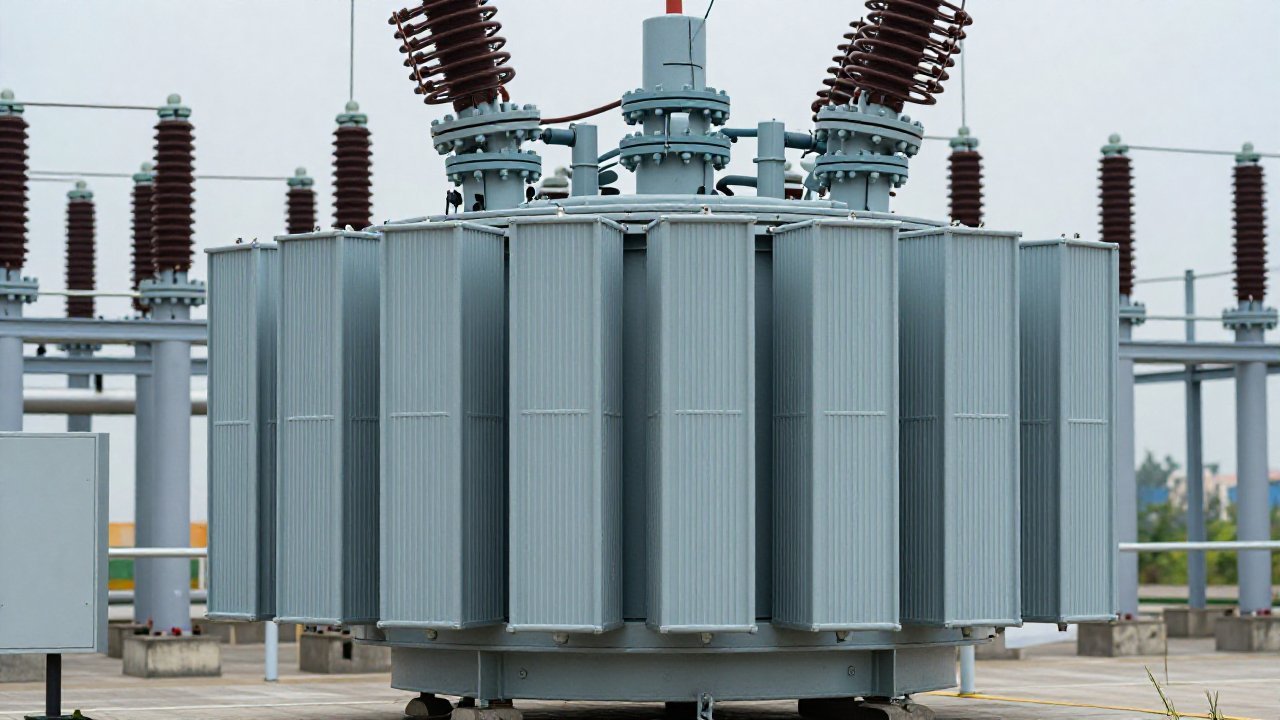
At CIEME 2026 in Beijing (8–10 September), monitoring suppliers showed continuous gas analysers built on laser photoacoustic spectroscopy. Each of those instruments, and every laboratory behind them, reads a sample taken by hand at a valve. The transformer oil sampling procedure still decides the quality of a dissolved gas analysis (DGA) result, however good the analyser downstream is.
The three things a sample has to preserve
A useful oil sample carries three properties to the laboratory. It has to represent the bulk oil, not the pipe or valve neck it came through. It has to still hold the gases dissolved in it at the moment of sampling. And it must not have picked up anything the transformer never contained, air above all. Those requirements pull against each other: oil leaves a drain valve easily, but the first litre is stale, and every second of turbulence invites air in.
Flushing, filling and sealing: the transformer oil sampling procedure
Sample from the bottom drain or sampling valve, where heavier gases and free water collect, never from a top fill port or conservator connection, which sit above the oil. Guidance published around IEC 60475, the sampling standard, asks for several litres at turbulent flow before anything is collected, so water, sludge and particulate matter from the valve neck are carried away rather than drawn into the syringe.
A drawn-aluminium bottle filled to the brim and closed under hand pressure is the field default, because the flexible wall absorbs thermal expansion and leaves no headspace. A glass syringe with a Luer cap is equivalent, provided the plunger moves back under the oil’s own pressure rather than being pulled, which would strip gas from the sample. Rigid glass bottles need a centimetre of headspace to survive transport, and that gap is where the gases go.
Tubing and light complete the list. Polytetrafluoroethylene (PTFE) or metal is acceptable; polyvinyl chloride (PVC) and rubber are not, because they absorb hydrocarbons or leach plasticiser into the result. Keep samples out of direct sun, label each one with the unit, valve, date and oil temperature, and get them cold.
| Sampling fault | What it does to the result |
|---|---|
| Headspace in the container | Gases migrate out selectively; hydrogen fastest, as it is the least soluble diagnostic gas |
| Air drawn in at the valve | Oxygen and nitrogen rise together near the 21:78 ratio of air |
| PVC or rubber tubing | False methane and ethane appear from tubing, not the transformer |
| Direct sunlight | Ultraviolet exposure generates hydrogen, which can look like incipient partial discharge |
| Delay beyond two days | Microbial activity adds hydrogen, methane and carbon dioxide |
Air brings oxygen and nitrogen and almost no acetylene, ethylene or ethane: it can hide a developing fault but cannot manufacture one. A headspace removes gases instead. A computed example published in 2026 puts the loss from a 100 mL bottle holding 5 mL of air at about 49 % of the hydrogen against roughly 11 % of the methane (vendor data, calculated for that headspace at 25 °C). Those are the first two gases a fault produces, so the damaged sample is the one that would have carried the earliest warning.
FAQ: How much oil should be flushed before a DGA sample?
Enough that the oil leaving the valve visibly changes character. Published guidance around IEC 60475 asks for several litres at turbulent flow, plus a litre or two through the sampling device to clear dead volume in the fitting and tubing. On a large transformer, two or three litres is a floor rather than a target.
FAQ: How long can a sealed sample wait for analysis?
Hours, not weeks. A glass or metal container is gas-tight on a transport timescale, but seals are imperfect and biological activity in the oil continues. The working convention is delivery within two days, cooled to a few degrees on the way, so microbial generation of hydrogen, methane and carbon dioxide stays slow.
Sample first, then trust the trend
A Duval triangle plot or a model trained on historical cases inherits the error of its input. If a unit’s numbers jump, the first question is whether the transformer changed or the transformer oil sampling procedure did. A repeat sample from a different valve, taken properly, is the standard first move. Only then does the reading deserve to be set against the fundamentals and the unit’s own history.
PAS DGA builds the on-line half of that chain, from the DGA-500 dissolved hydrogen sensor up to the DGA-900 nine-gas analyser with moisture, so a rising trend is caught between laboratory visits rather than at the next one. The laboratory sample still anchors that trend. To review sampling and monitoring practice across a fleet, contact the team.
Sources
- IEC 60475 — method of sampling insulating liquids (flushing, container integrity).
- IEC 60567:2023, Annex D — per-gas back-correction for headspace in a sealed sample.
- ASTM D3613 — sampling of insulating liquids for dissolved gas analysis.
- TriboTech, The physics behind correct oil sampling, 2026 — headspace loss example, 100 mL bottle with 5 mL air at 25 °C; vendor data.
- Megger knowledge hub, February 2026 — container and tubing practice.
- CIEME 2026, Beijing, 8–10 September 2026 — exhibition listing.