
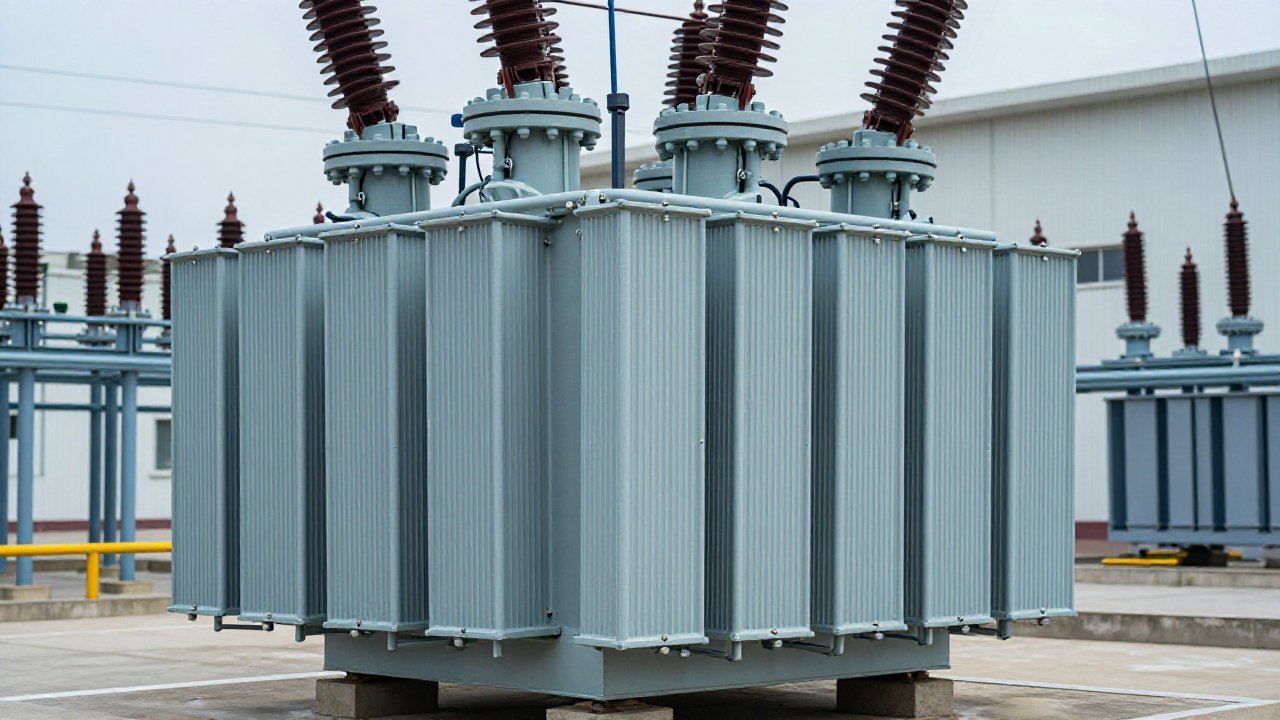
Annual transformer oil testing is still the backbone of fleet maintenance, and in 2026 tighter budgets are forcing utilities to audit what that program actually covers. Oil testing is broader than dissolved gas analysis: it spans moisture, breakdown voltage, acidity and paper condition, and each test answers a different question about the insulation system. This guide maps a practical transformer oil testing program — the tests, the frequency, the standards and what it costs next to online monitoring.
What a transformer oil testing program includes
The test battery is larger than most new maintenance engineers expect. A routine program covers the dissolved gases, the oil itself and the condition of the paper insulation. Dissolved gas analysis gets the most attention, but moisture and electrical tests often flag problems first.
| Test | What it finds | Typical reference |
|---|---|---|
| Dissolved gas analysis (DGA) | Fault gases and their rates (H2, CH4, C2H4, C2H2, CO, CO2) | IEEE C57.104, IEC 60599 |
| Moisture content | Water in oil, a driver of dielectric and paper degradation | IEC 60814 |
| Breakdown voltage (BDV) | Dielectric strength of the oil | IEC 60156 |
| Acidity / neutralization number | Oil oxidation and aging byproducts | IEC 62021, ASTM D974 |
| Tan delta / power factor | Dielectric losses from contaminants and aging | IEC 60247 |
| Furan compounds / degree of polymerization | Paper insulation aging | IEC 61198 (furans), ASTM D4243 (DP) |
This is the common core; condition-based programs add particle count, interfacial tension or resistivity on units with a history. None of these are online diagnostics — they are laboratory measurements made on a drawn sample.
How often and which standards drive the schedule
Sampling frequency follows risk, not habit. IEEE C57.104 and IEC 60422 both move from calendar-based to condition-based intervals: a transformer with a healthy history and a stable load tests annually, while one that has seen a through-fault, an overload or an alarm tests weekly or monthly until the gas trends settle. The maintenance standards for in-service oil (IEEE C57.106, IEC 60422) set the pass limits for moisture, breakdown voltage and acidity, while DGA interpretation follows C57.104 or IEC 60599. Current editions and the scope of each document are summarized in the DGA standards hub.
What transformer oil testing costs, lab versus online
A laboratory DGA panel runs roughly $100-500 per sample (2026 planning estimate; the price guide explains the sourcing) before shipping and turnaround, and the full battery (moisture, BDV, acidity, furans) adds more. The DGA monitor price guide breaks down real 2026 laboratory and instrument costs. The structural weakness of a laboratory-only program is timing: samples are drawn, shipped and analyzed on a cycle of weeks, so a fast-developing fault can slip between rounds. That is the gap online DGA monitoring closes, and the upgrade decision is covered in our lab-versus-online DGA guide. The realistic program for most fleets is both: routine laboratory rounds for the full battery, plus a low-cost online hydrogen sensor for continuous screening, with a nine-gas monitor reserved for critical or alarmed units.
How often should transformer oil testing be done?
For a healthy transformer, annual sampling is the common baseline under IEEE and IEC guidance; utilities with high criticality or poor history shorten the interval, and post-fault units are tested until gas rates return to normal. Frequency should be a written policy rather than a default, because the cost of an extra sample is tiny next to the cost of a missed fault.
Which tests matter most for an aging transformer?
For a unit past mid-life, moisture and paper-condition indicators move the needle: moisture accelerates paper aging, and furan and degree-of-polymerization tests track the insulation directly. DGA stays the leading indicator because dissolved gases appear before dielectric tests fail. Transformer oil testing programs on older fleets should therefore weight DGA and moisture first, with breakdown voltage and acidity as supporting checks.
Build an oil testing program that fits your fleet
A defensible program combines laboratory rounds with continuous screening. PAS DGA supplies the screening layer — palladium thin-film hydrogen sensors for fleets and the nine-gas DGA-900 for critical units — alongside the sampling guidance most teams already have. Contact PAS DGA to map your fleet and balance the laboratory and online budget.