
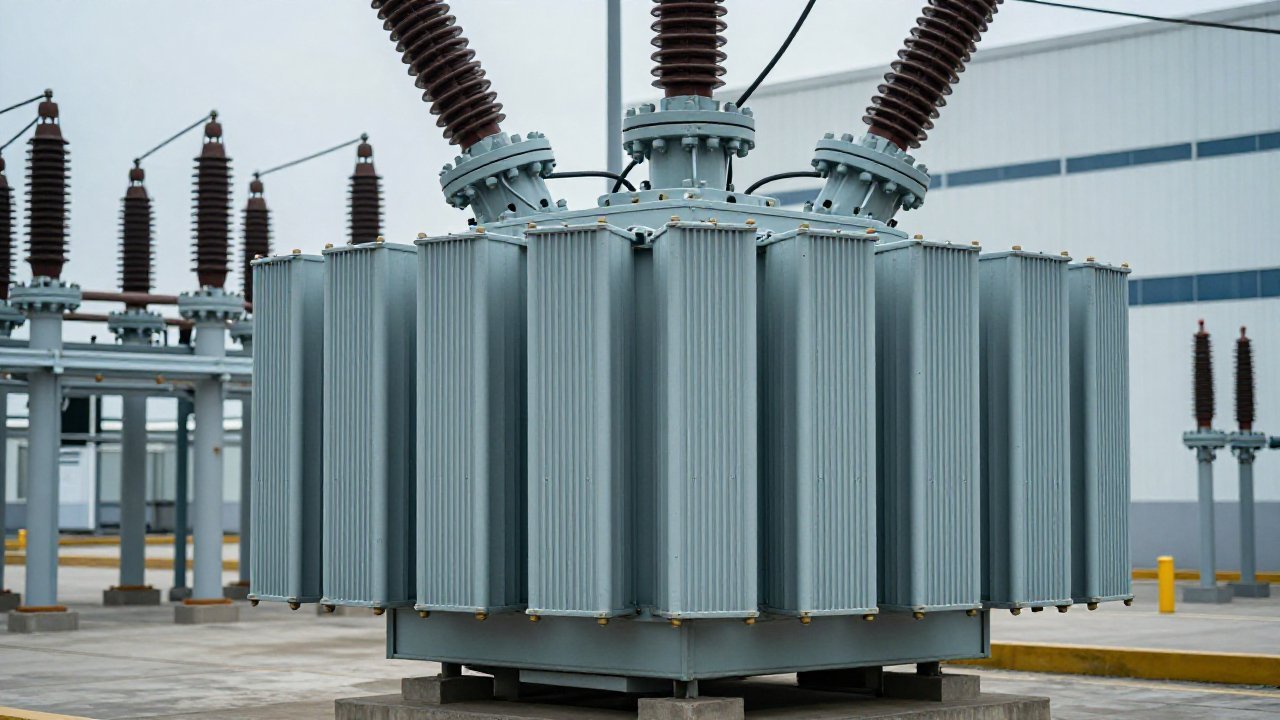
A 2026 field study puts calibration drift back on the table
In a paper published this year in Electric Power Systems Research, engineers describe a field-deployable calibration platform for online dissolved gas analysis (DGA) monitors. It produces standard oil samples with seven gases at tightly controlled concentrations, and the team used it to test a commercial online monitor on a 220 kV hydro transformer. The result was blunt: substantial deviations and poor repeatability under real operating conditions. For anyone making maintenance decisions from DGA numbers, the finding points to the layer that decides whether those numbers mean anything — the laboratory gas standards used to calibrate the instruments.
The study matters twice over. Calibration is not a one-time event, because online monitors drift as membranes age and optics shift. Field instruments deserve the same discipline as a laboratory: a known sample pushed through the real extraction path at defined intervals. Some monitors self-calibrate against an internal reference gas; the authors still recommend an independent full-chain check with standard oil.
What laboratory gas standards are — and the two forms they take
A laboratory gas standard is a reference material with a known concentration of one or more gases, and a DGA laboratory leans on two kinds. A certified gas mixture is a cylinder of precisely blended fault gases, traceable to a body such as NIST; it verifies the gas chromatograph (GC) detector and its calibration curve. A gas-in-oil standard goes further: gas is dissolved into insulating oil at a known level, so it exercises the whole measurement chain — extraction, headspace transfer and analysis — not just the detector. Producers make both under quality systems such as ISO 17034; the labs that use them are typically accredited to ISO/IEC 17025.
| Standard type | What it contains | What it verifies |
|---|---|---|
| Certified gas mixture | Known ppm of fault gases in a cylinder | GC detector response and calibration curve |
| Gas-in-oil standard | Known gas dissolved in insulating oil | Full chain: extraction plus measurement |
| Moisture-in-oil standard | Known water content or activity | Moisture sensors and Karl Fischer checks |
The care is warranted because DGA is comparative: a trend is only as trustworthy as the calibration at both ends. IEC 60567:2023 puts dissolved-gas repeatability near ±15 %; that tolerance is the budget inside which sampling, extraction and measurement must fit.
Errors enter quietly. A lab reading of 120 ppm hydrogen is a back-calculation from headspace concentration through the oil/gas partition described by the Ostwald coefficient; the wrong coefficient shifts every result. An expired gas cylinder or a drifted response factor compounds the problem. Interpretation standards such as IEEE C57.104 and IEC 60599 assume the measurement beneath them is sound — which is why an accredited lab re-verifies with control standards on a documented cycle.
Where an online hydrogen sensor keeps the chain simple
The calibration burden scales with analyzer complexity. A single-gas dissolved hydrogen sensor sits at the simple end: a direct-in-oil monitor such as the DGA-500 hydrogen monitor uses a palladium-alloy membrane and measures hydrogen continuously, with no carrier gas and no consumables. Its role is not to replace the accredited laboratory — the lab and its reference samples remain the referee for periodic full-gas tests and for cross-checking field instruments.
| Approach | Measurement cycle | Calibration demand |
|---|---|---|
| Laboratory GC DGA | Annual to quarterly samples | Certified gas and gas-in-oil standards on a defined cycle |
| Online multi-gas DGA | Continuous | Self-calibration plus periodic field verification with standard oil |
| Online dissolved H2 sensor | Continuous, minutes | Factory-calibrated, low-drift; periodic cross-check against a lab sample |
That split answers practical certification questions: standards verify the instrument, and the instrument keeps the picture between samples honest.
How often should laboratory gas standards be renewed?
Follow the certificate on the reference material and the laboratory’s quality system. Certified gas cylinders and gas-in-oil standards carry expiry dates and should be replaced on them, not “when they look empty.” A GC laboratory runs calibration or control standards with each batch and records the schedule for its ISO/IEC 17025 audit. The same logic applies in the field: verification intervals must stay short enough that drift cannot outrun the fault it is meant to catch.
Does an online DGA monitor need its own calibration gas?
Many multi-gas online analyzers self-calibrate against an internal reference gas, which handles detector drift between service visits. What internal gas cannot verify is the full sampling path — the membrane, tubing and degassing that bring oil to the sensor. That is why the 2026 study pushes for periodic verification with an independent gas-in-oil sample. A direct dissolved hydrogen sensor has fewer drift surfaces, so its practical need is a periodic cross-check against a laboratory oil sample rather than routine calibration gas.
PAS DGA for transformer oil testing
PAS DGA builds monitors for each rung of the chain. The DGA-500 tracks dissolved hydrogen continuously for early warning; the DGA-900 analyzer extends coverage to nine gases plus moisture when an asset needs the full set online; the hydrogen sensor family covers retrofit and OEM builds. For a broader view of how online data sits beside laboratory history, start with the DGA fundamentals hub, or contact PAS DGA to discuss calibration practice for your fleet.