
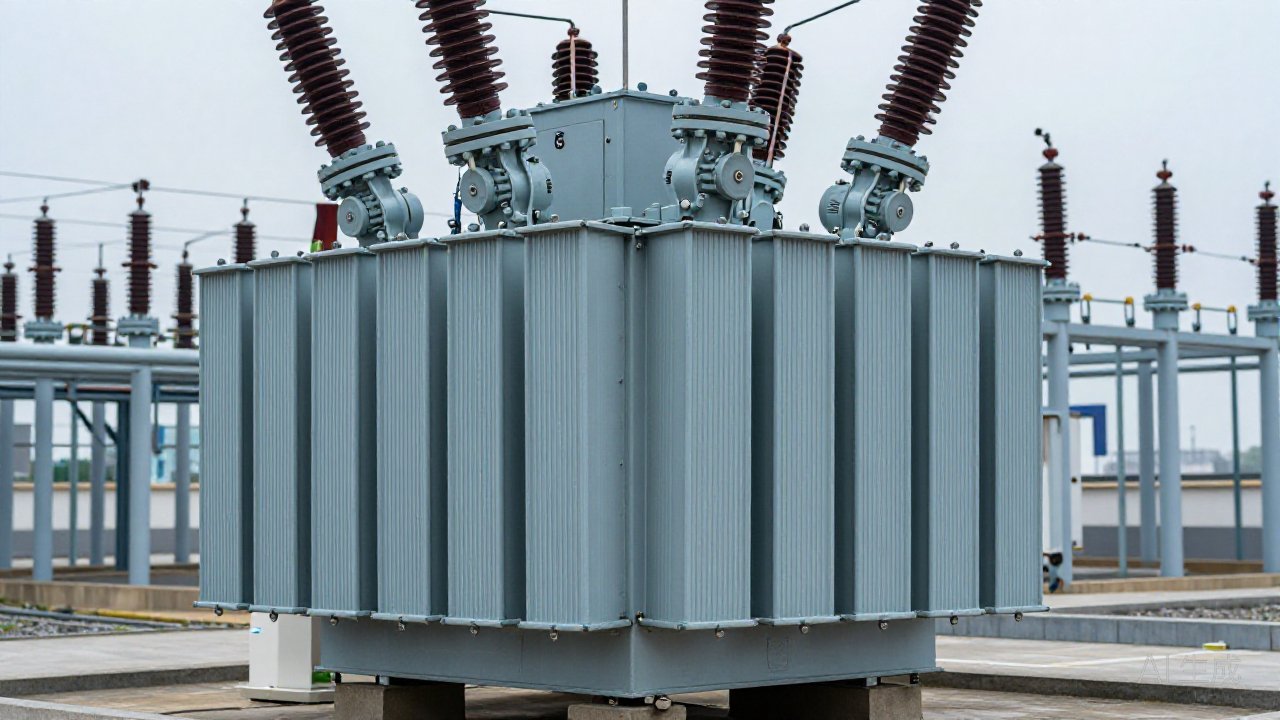
In November 2026 a Chinese power-industry review described equipment monitoring moving from single-sensor pilots to integrated substation systems, naming UHF partial discharge, DGA, bushing monitoring and fibre-optic temperature in one architecture. The list matters less than the timing it implies. Power transformer PD testing online answers a question an oil sample cannot: is there electrical activity inside the tank at this moment?
Two clocks, one defect
A partial discharge is an electrical event. It lasts from nanoseconds to microseconds, repeats at a rate set by the defect geometry and the voltage phase, and stops when the condition that produced it stops. Dissolved gas analysis (DGA) sees a chemical consequence instead. Gas has to be generated, dissolve into the oil, reach the sampling point and be measured — a chain that takes hours to days, and longer in a large tank with slow oil circulation.
Neither clock is wrong. One reports the event; the other reports the accumulation. Treating them as competitors is the usual mistake.
What the discharge does that the gas cannot
An active defect under oil produces a pulse every cycle while it is active. A UHF coupler on an oil valve records the radiated wave, and an HFCT around the earth connection records the current that follows it. Both are direct measurements, available immediately and comparable against the unit’s own history. That is why PD detection methods tend to be the earlier indicator of a developing insulation problem.
“Earlier” is conditional. Intermittent discharge can appear for a few cycles and vanish for hours, and a monitor that alarms only on an absolute level may never see it. The practical countermeasure is a baseline built on the same transformer and a trigger set on deviation, which is the argument in PD alarm thresholds and trending.
Where the timing gap changes the decision
In power transformer PD testing online the reading is available while the event is still in progress. That difference decides what a shift team does next. The ranges below are typical for each method, not guaranteed values.
| Signal | What it detects | Time to first evidence | Blind spot |
|---|---|---|---|
| UHF or HFCT PD | Electrical activity in the insulation | Seconds to minutes | Needs coupler coverage; external noise can mask it |
| Online hydrogen or DGA | Dissolved gas at the sensor | Hours to days, gas dependent | One point on a large tank |
| Laboratory DGA | Full gas spectrum and ratios | Sampling interval, often weeks | Misses everything between draws |
| Oil moisture | Water in oil and paper | Weeks to months | Equilibrium lag; temperature dependent |
The sequence in a real event is easy to reconstruct. A discharge that starts at 02:00 can be visible to a PD channel within seconds. Hydrogen may begin to move within hours. A routine sample drawn three weeks later may show only a modest rise with no obvious cause — by which time the unit has been running with the defect for most of a month.
What PD still cannot tell you
PD monitoring does not type the fault. It shows that a discharge exists, roughly where it sits when several channels share a clock, and whether it is growing. It cannot read the gas signature that separates arcing from overheating, and a single coupler cannot distinguish an internal defect from a noisy external source. For that, PD and DGA are read together: the electrical channel supplies the timing, the chemical channel supplies the classification.
Can partial discharge monitoring replace dissolved gas analysis?
No. The two methods observe different physical processes, and each has a blind spot the other covers. PD is the fast channel and is sensitive to electrical defects that have not yet produced gas; DGA remains the reference for fault type, severity and gas ratios. A multi-gas monitor such as the DGM-900 supplies the chemical side when both are installed.
How long does DGA take to react to a new fault?
It depends on fault energy, the gas being formed and the oil circulation. Hydrogen usually appears first in low-energy discharge, while acetylene indicates high energy and is rarely slow. A hydrogen sensor may show movement within hours, but a routine lab sample may not capture the change until the next scheduled draw. The DGA fundamentals explain the formation chain in more detail.
Power transformer PD testing online does not make dissolved gas analysis redundant; it moves the first warning earlier. A maintenance program that reads only one of the two is blind for part of the fault’s life. TPD-400 covers UHF, HFCT, acoustic and RF inputs in one unit, specified in line with IEC TS 62478 and GB/T 42287 for non-conventional PD measurement — standards that define the method, not a certificate of conformity. Where the electrical and chemical channels are installed together, start from online versus offline PD testing and the DGM-900. To match a configuration to a specific transformer, send the nameplate and the test list.
Sources: Chinese power-industry review of online monitoring trends, 1 November 2026; State Grid Jiangsu on-site verification report covering six transformer online-monitoring categories, August 2026; IEC TS 62478:2016; IEC 60270:2025.