
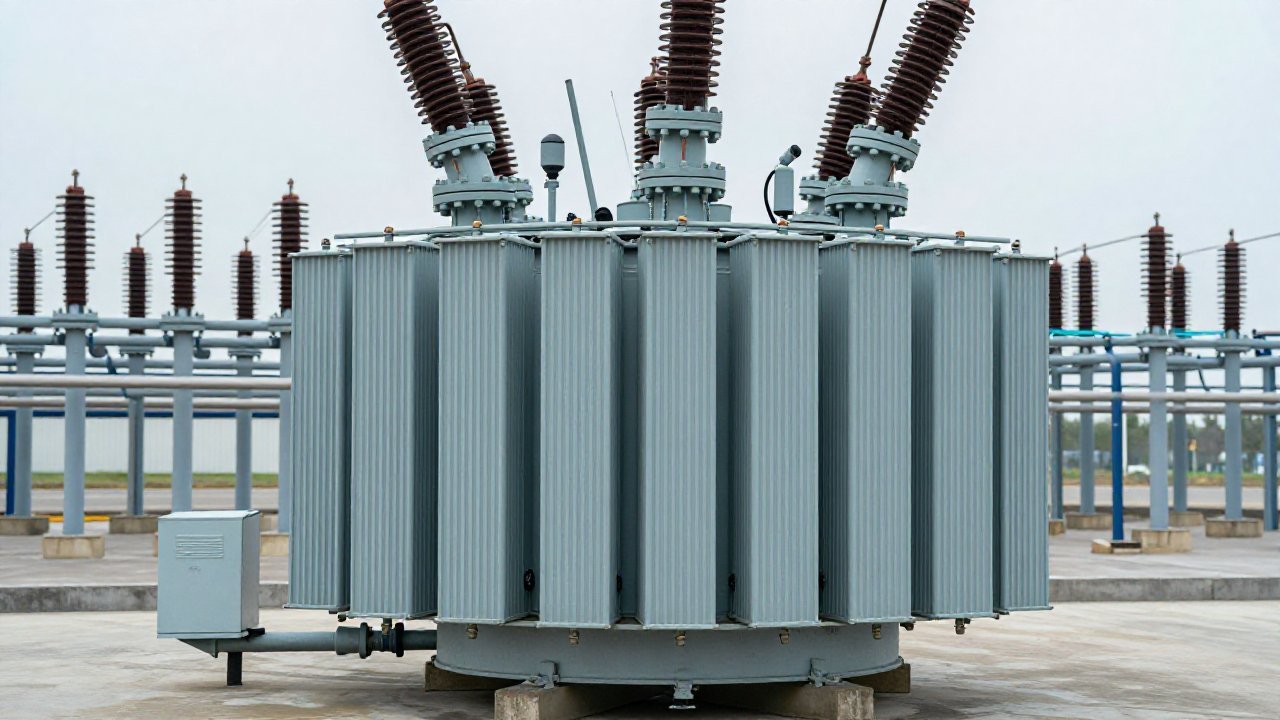
A September 2026 signal for condition-based oil testing
On 2 September 2026, Korea Electric Power Corporation (KEPCO) and the U.S. Electric Power Research Institute (EPRI) agreed to field-test a continuous transformer bushing monitor at EPRI’s outdoor site in Lenox, Massachusetts. The deal is small in dollars but large as a signal: utilities keep moving maintenance budgets from fixed-interval inspection to condition-based monitoring — which puts the transformer oil testing cost line back under scrutiny.
What a laboratory DGA sample really costs
Dissolved gas analysis (DGA) reads the fault gases dissolved in oil and remains the backbone of transformer condition assessment. Commercial per-sample prices sit in a published band of roughly US$100–400. Rates below are third-party published list prices (2025–26), not PAS DGA vendor data.
| Benchmark (published list rates, 2025–26) | Per-sample DGA rate | Notes |
|---|---|---|
| Outsourced global laboratory, US | ≈US$150–200 | Typical service-provider list price |
| North American laboratory range | ≈US$150–400 | Depends on package and turnaround |
| ASTM D3612 method, US supplier | ≈US$220 | Classic gas-chromatography route |
| IEC 60567 method, EU supplier | ≈US$310 | Headspace/partition route |
| UK laboratory (Eden Oil) | £144 incl. VAT (≈US$185) | Published single-test price |
| UAE utility laboratory (DEWA) | AED 1,885 (≈US$510) | Official published utility rate |
A full oil screen is wider than DGA alone: moisture, breakdown voltage, acidity and sometimes furans are each priced separately, and field sampling adds labour, a one-time sampling kit (one UK list prices its kit near £500) and courier cost. The budget line that matters is not one test but the transformer oil testing cost per transformer-year — sample fee plus logistics, times samples per year. How the sample is drawn also changes the result; see our oil sampling guide for the common error sources.
The expensive gap between samples — and the online alternative
The blind window in a twice-a-year plan
IEC 60599 and IEEE C57.104 tie sampling frequency to the last DGA result: normal units are tested every 6–12 months, suspicious units quarterly, gassy units monthly. Even a quarterly plan leaves a three-month blind window, so a fault that starts the day after a sample stays invisible until the next test. Hydrogen (H₂) usually appears first in a developing fault, making it the signal the gap hides. One lab point cannot show a rate of rise — that takes two readings weeks apart. Our rate-of-rise guide explains why the trend, not the single value, separates a real fault from noise.
When an online hydrogen monitor changes the math
A dedicated online dissolved hydrogen monitor reads oil continuously through a membrane and a hydrogen-selective element such as a palladium thin film. Single-gas units list at about US$2,000–14,000; multi-gas monitors at US$10,000–45,000 (our DGA monitor price guide). As an illustrative estimate, one critical transformer sampled four times a year costs roughly US$250–400 per test once logistics and labour are counted — US$1,000–1,600 a year, US$10,000–16,000 over ten years: the same band as a mid-range online hydrogen monitor, minus the blind window. The 10-year view matters more than the purchase order; see our online monitor TCO comparison. An online unit replaces frequency, not the laboratory — you still take a confirmation sample at commissioning and after any alarm.
FAQ: How much does transformer oil testing cost per sample?
Published DGA rates cluster between roughly US$100 and US$400 per sample: a gas-chromatography run to ASTM D3612 near US$220, a headspace run to IEC 60567 near US$310, a UK lab at £144 including VAT, a UAE utility at AED 1,885 (third-party published lists, 2025–26). A combined screen with moisture and breakdown voltage costs more, and volume contracts lower the per-sample price. Ask three accredited labs for quotes on your actual sample count before fixing the budget line.
FAQ: When is an online DGA monitor cheaper than lab oil testing?
At one sample a year, a monitor is hard to justify on test fees alone. The crossover sits at higher frequency and higher criticality: when a single transformer already costs several hundred dollars a year in sampling, a US$2,000–14,000 online hydrogen monitor lands near the same annual figure over a ten-year service life while covering every day. In practice the two tools answer different questions:
- Stable network and distribution units — keep scheduled laboratory DGA; add a hydrogen monitor on the oldest or highest-loaded units first.
- Critical 110 kV and above, tap-changer-heavy or post-fault units — fit an online dissolved hydrogen monitor and keep an annual lab sample for audit.
- Transmission, converter and known-problem transformers — step up to a multi-gas monitor; these units need diagnosis, not just an early signal.
PAS DGA: start with hydrogen, keep a nine-gas path
PAS DGA builds the whole ladder. The DGA-500 field-standard hydrogen monitor and the DGA-300 OEM probe cover the 5–5000 ppm dissolved hydrogen range (vendor data); the DGA-900 laser photoacoustic system adds eight more gases plus moisture when a unit needs full diagnosis. If you are re-budgeting oil testing this year, put a hydrogen monitor on the units whose failure would hurt most and keep the laboratory for confirmation and audit. Contact PAS DGA with your fleet size and sampling frequency for a cost comparison on your own spreadsheet.