
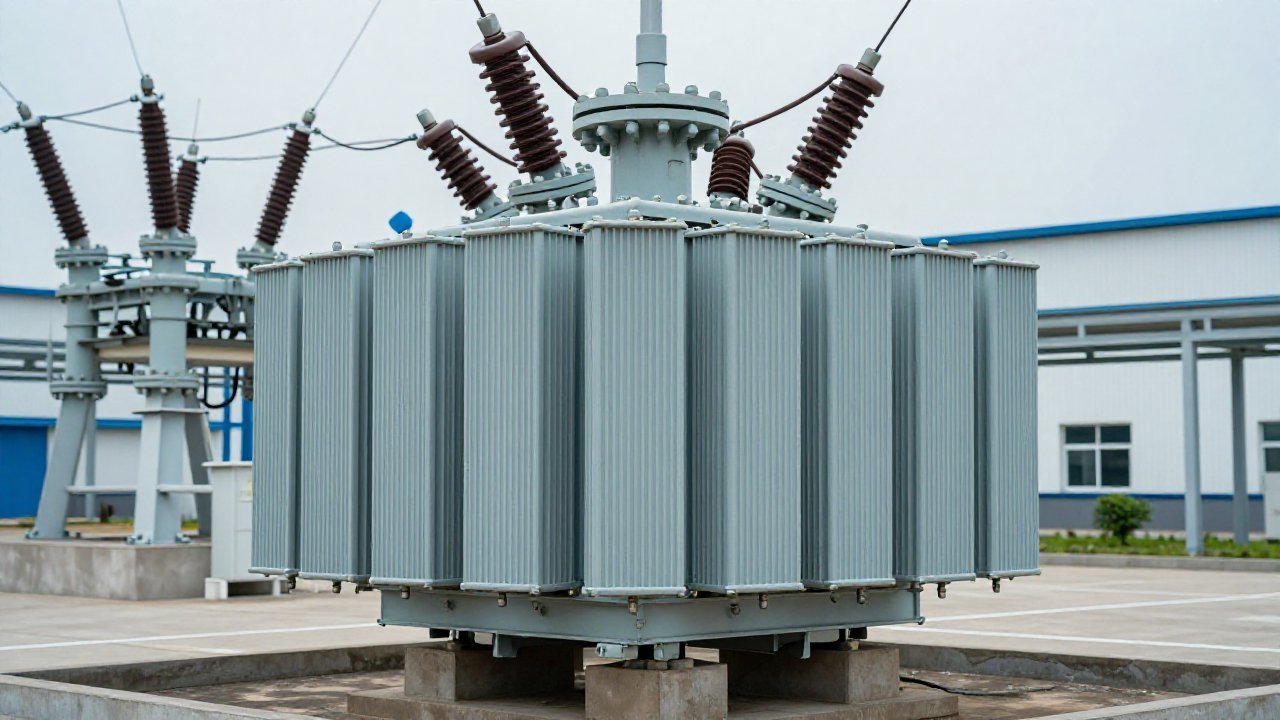
Acetylene (C2H2) does not drift upward by accident. It forms only where the energy inside a transformer tank is high enough to reshape oil molecules into that configuration — the signature of arcing and high-energy discharge. On a 220 kV main transformer at a substation in northern China, an online DGA acetylene monitoring installation watched that gas go from nothing to 2.99 µL/L in eleven hours on 26 September 2026, and the unit was taken out of service the same day. What makes the record worth reading is not the final number. It is that the monitor changed its own behaviour as the readings moved.
Why acetylene, and not hydrogen, sets the clock
Dissolved gas analysis (DGA) tracks several fault gases at once, and most of them rise slowly enough to give an operator weeks of planning time. Acetylene is not one of them. Hydrogen (H2) is produced by a wide range of low-energy conditions, from stray gassing to ordinary thermal ageing, so a hydrogen rise is a prompt to look closer. Acetylene points at a much narrower and more dangerous set of conditions, and once it appears the useful question is not whether there is a fault but how fast it is developing. A laboratory sample answers that on a timescale of months. A continuous monitor answers it in hours.
Eleven hours, four readings
| Time | What happened | C2H2 (µL/L) |
|---|---|---|
| 06:00 | First non-zero reading against a zero baseline; the monitor’s first attention threshold was crossed and an alarm was raised | 0.29 |
| 12:00 | Second attention threshold crossed; the unit switched into re-test mode and shortened its measurement cycle from six hours to one hour | 1.93 |
| 13:00 | Reading taken on the shortened cycle | 2.55 |
| 14:00 | Offline oil sample drawn for laboratory confirmation | — |
| 17:00 | Laboratory result returned, confirming the online trend | 2.99 |
| Same day | Transformer taken out of service | — |
The transformer had been running with no acetylene at all. Within six hours of the first trace reading the value had climbed sixfold; within eleven hours the laboratory put it just under 3 µL/L. That is the shape of a high-energy internal discharge developing inside the tank, and on this trajectory the distance between a number worth watching and a failure is measured in hours rather than weeks.
Two things turned those readings into a decision. The first was escalation logic inside the unit: crossing the second attention threshold did not merely raise a louder alarm, it triggered a re-test mode and pulled the measurement cycle from six hours down to one. From that point the station was watching a curve build in near real time rather than reviewing a snapshot from the morning. The second was independent confirmation — the sample drawn at 14:00 came back at 2.99 µL/L, consistent with the last online value of 2.55 µL/L and with gas that kept forming during the four hours between reading and report. Online DGA acetylene monitoring supplied the eleven hours before that result; the laboratory supplied the certainty.
Why would a monitor shorten its own measurement cycle?
A fixed interval sized for steady-state operation cannot resolve a fast-developing fault. Six hours is long enough to miss the entire useful part of an acetylene rise. Shortening the cycle to one hour once an attention threshold trips converts a daily trend into an hourly one, which is the resolution an event like this requires — and it removes the response from the hands of whoever happens to be watching the screen.
Does online DGA acetylene monitoring replace laboratory oil testing?
No, and this record shows why the two belong together. The laboratory supplied the reference confirmation on a recognised method, and 2.99 µL/L is the figure the station acted on. The monitor supplied the timing: it detected the fault, escalated its own sampling, and produced the trend that the laboratory result then corroborated — eleven hours before that result existed.
Monitor your 220 kV transformers the same way
The device in this record is a laser-photoacoustic online monitor from the PAS DGA DGA-900 platform, which measures acetylene alongside the other fault gases and moisture on a configurable cycle. If your fleet still relies on periodic sampling alone, the online DGA monitor selection framework sets out how to size cycle length, alarm tiers and escalation rules to the assets that carry the most risk. To discuss applying the same scheme to your own transformers, contact PAS DGA.