
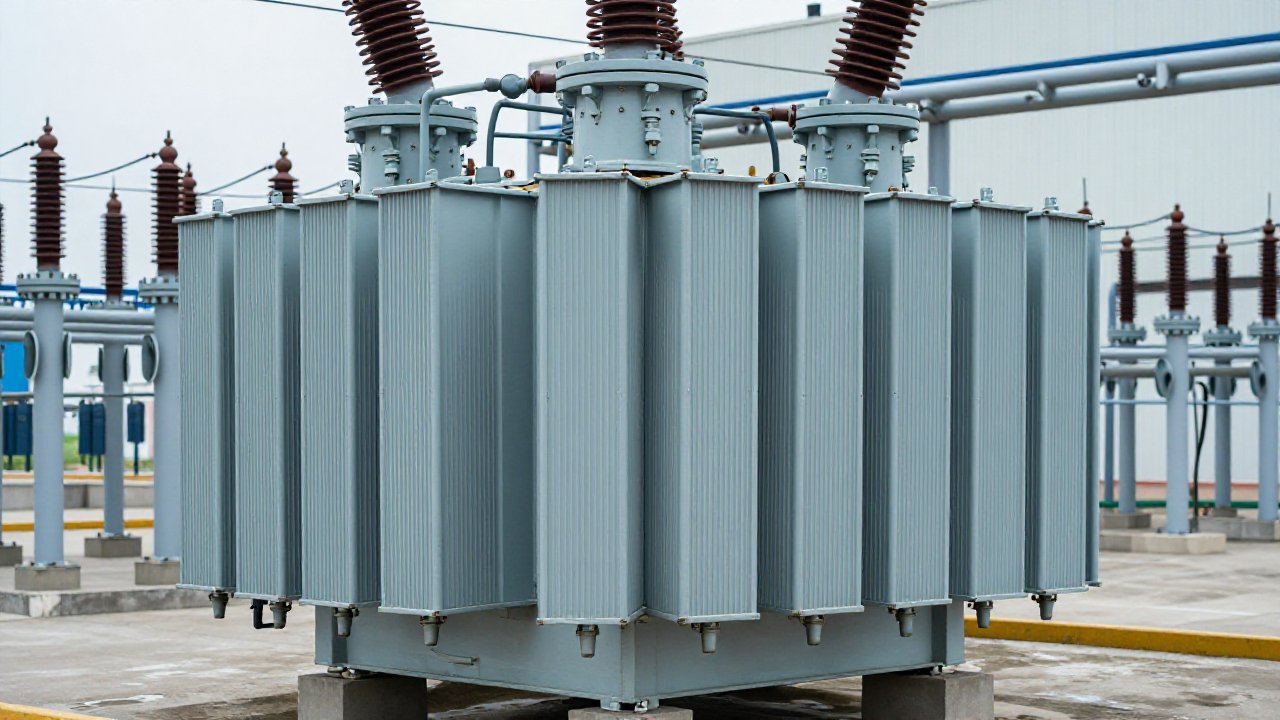
The August 2026 cover story in NETA World Journal on renewable-energy transformer DGA makes a point maintenance teams often under-weight: moisture is a leading health threat in its own right. The article notes that a rise in moisture in transformer oil from roughly 1% to 3% relative saturation can sharply shorten transformer life, and that cyclic loading makes solar and wind-farm units especially vulnerable.
Moisture in transformer oil is not a side issue next to dissolved gas analysis (DGA); it is a second axis of the same insulation-health picture. Dissolved gas analysis tracks fault gases produced by thermal and electrical stress, while moisture tracks the condition of the paper and oil insulation system. This guide walks through the limits that matter, the difference between ppm and relative saturation, and why an online monitor that pairs hydrogen with moisture is becoming the practical fleet answer.
What the moisture standards actually say
Two documents set the working limits. IEC 60422 covers supervision and maintenance of mineral insulating oils, and IEEE C57.106 is its North American counterpart. Both express the limit in ppm by Karl Fischer titration (IEC 60814) and scale it by voltage class: for in-service transformer oil, roughly 30 ppm below 72.5 kV, 20 ppm at 72.5–170 kV and 15 ppm at 170–400 kV.
| Voltage class (in-service) | IEC 60422 water-content reference (ppm) |
|---|---|
| < 72.5 kV | ≤ 30 |
| 72.5–170 kV | ≤ 20 |
| 170–400 kV | ≤ 15 |
These are planning references, not a binding pass/fail. IEC 60422 itself warns that rigid rules are impossible for in-service oil and groups results into condition bands — good, fair and poor — where “fair” calls for tighter sampling and “poor” for corrective action such as drying or oil treatment. Manufacturer O&M limits take precedence, and trend matters more than a single snapshot.
Why ppm alone misleads
A bare ppm figure hides the physics that makes moisture dangerous. Water content reads differently at different temperatures because the oil’s saturation point rises with temperature: a transformer that looks dry at operating temperature can form free water as it cools, when dielectric breakdown risk climbs. That is why both standards steer users toward relative saturation (water activity, aw) — oil above roughly 2–3% is generally treated as a warning band, and 5% or more as moderately wet. A dashboard should plot relative saturation and its trend, not a ppm snapshot.
The sampling gap and the online answer
Offline sampling every three to six months watches moisture, but it has the same blind spot as offline DGA: a fast ingress event — a failed breather, a leaky gasket, a wet load cycle — can happen entirely between two samples. This is the same argument that pushed utilities toward online dissolved hydrogen monitoring, since hydrogen is the first gas to appear in most faults. Moisture is the parallel signal on the insulation side, and an online unit that measures both gives a continuous trend for the two fastest-moving health signals on a transformer. Our DGA-900 laser-PAS monitor, for example, is specified to report nine gases plus moisture from one cabinet (vendor data) — the configuration most fleet engineers ask for once they see both trends side by side.
A practical program starts with a baseline — two lab measurements of moisture, acidity and breakdown voltage — then chooses online or periodic sampling by criticality. For a critical power or GSU transformer, an online hydrogen-plus-moisture monitor removes the sampling lag; for a distribution fleet, relative-saturation screening with periodic lab confirmation keeps cost in check. Set alarms on trend (a rising reading past the 2–3% warning band, or a step change) rather than a single value, and correlate water trend with gas trend before scheduling drying or load relief. Vendor accuracy claims belong in the RFQ acceptance test.
What is the acceptable moisture level in transformer oil?
It depends on voltage class. IEC 60422 references roughly 30 ppm in-service below 72.5 kV, 20 ppm at 72.5–170 kV and 15 ppm at 170–400 kV (Karl Fischer), with condition-band guidance for borderline readings. Manufacturer limits and trend should override a generic number.
Why do online monitors measure relative saturation instead of ppm?
Relative saturation (water activity) tells you how close the oil is to its saturation point at the current temperature, which is the condition that leads to free water and dielectric failure. A ppm number alone cannot express that risk because the saturation point moves with temperature.
Can the same monitor track hydrogen and moisture?
Yes. Multi-parameter online DGA units such as the DGA-900 combine dissolved-gas measurement with a moisture channel, so a single cabinet produces both the hydrogen trend and the water-activity trend needed for early fault and insulation-condition alarms.
Dissolved hydrogen gives the first warning of an incipient fault; moisture in transformer oil gives the parallel warning for insulation health. Teams that monitor only gas leave the water half of the picture to a quarterly lab visit — the exact lag a rising humidity event exploits. If you are standardizing a fleet specification, compare our dissolved hydrogen sensors and the nine-gas-plus-moisture DGA-900 against your RFQ, and ask us about retrofit options on live transformers.