
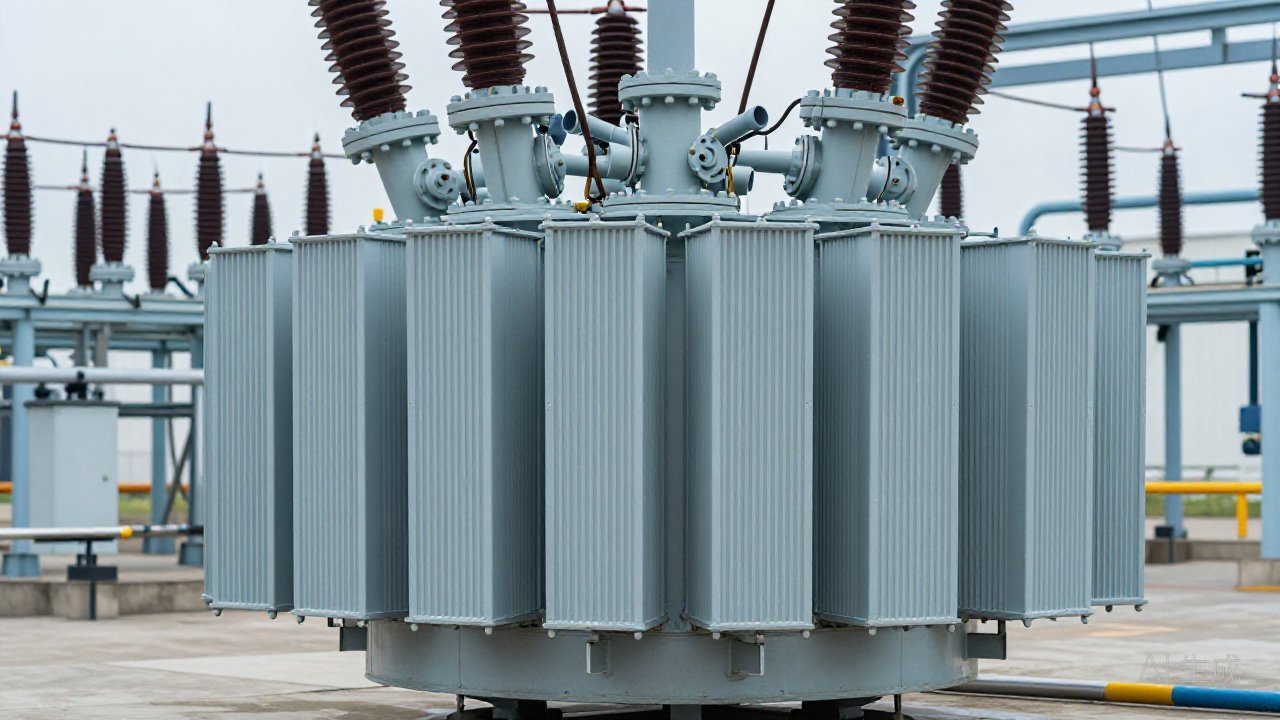
A 2026 study on mechanical vibration and partial discharge reported that vibration can shift PD inception voltage, magnitude and repetition rate in transformer insulation defects. The finding is a reminder for transformer insulation condition monitoring: discharge, ageing products and moisture are not three views of one number. They are three degradation channels with different clocks, and a program that reads only the fastest one will miss the slow damage underneath it.
Three channels, three time constants
The practical difficulty is that the signals do not move together. A discharge can start and stop within a single voltage cycle; paper ageing accumulates over years; moisture drifts with season and load. Comparing them as if they were interchangeable produces false reassurance.
| Signal | What it measures | Time constant | Blind spot |
|---|---|---|---|
| Partial discharge | Electrical activity in the insulation | Seconds to minutes | Intermittent; depends on coupler coverage |
| Ageing products | Paper and oil degradation | Months to years | Insensitive to an early electrical defect |
| Moisture | Water in paper and oil | Weeks to months | Equilibrium lag; temperature dependent |
Electrical: partial discharge
PD is the only one of the three that is a direct measurement of an active defect. It appears as pulses, it can be counted per cycle, and with several synchronised channels it can be located. Its weakness is precisely its speed: a defect that discharges for a few cycles and then goes quiet looks like nothing at all on a monthly report. Continuous measurement and a baseline built on the same unit are what make the signal usable, as covered in PD alarm thresholds and trending.
Chemical: paper ageing and oil degradation
Carbon monoxide and carbon dioxide are produced when paper degrades, and their ratio and trend carry more information than either value alone. Furans add a marker specific to paper ageing, while other gases point to oil degradation or to a thermal fault. All of them integrate over time, which is why DGA is good at severity and poor at timing. The gas formation chain is set out in DGA fundamentals, and a multi-gas monitor such as the DGM-900 provides the chemical channel on a continuous basis.
Moisture: the multiplier
Water in paper lowers breakdown strength and accelerates ageing, so moisture does not compete with the other two signals — it multiplies them. It also moves slowly and depends on temperature, which means a single sample can read low on a cold day and high after a hot week. Moisture in transformer oil explains the equilibrium behaviour and why sampling conditions must be recorded with the result.
Which signal should trigger an outage decision?
Rarely one signal on its own. A discharge that is rising, a gas rate of rise that has changed and moisture above the limit for the voltage class together make a much stronger case than any single number. A transformer insulation condition monitoring program should be built to read all three before it escalates. The reverse is also true: one high reading with the other two flat usually calls for better data, not an immediate outage.
Can moisture cause partial discharge?
Moisture does not create a defect by itself, but it lowers the inception voltage of an existing one and raises the energy released when it discharges. That is why wet insulation can show PD that disappears after oil processing, and why a PD reading taken shortly after drying should be treated as a new baseline rather than a continuation of the old one.
Transformer insulation condition monitoring is a reading discipline, not a sensor count. TPD-400 supplies the electrical channel with UHF, HFCT, acoustic and RF inputs, specified in line with IEC TS 62478 and GB/T 42287 — a method statement, not a certificate. The chemical side runs through the DGM-900 or hydrogen sensors, and the comparison with gas-based diagnosis is set out in PD monitoring versus dissolved gas analysis. To review the three signals against a specific transformer, send the test history and oil results.
Sources: 2026 study on mechanical vibration and PD behaviour in transformer insulation (V-PRPD); IEC 60422; IEC 60270:2025; IEC TS 62478:2016.