
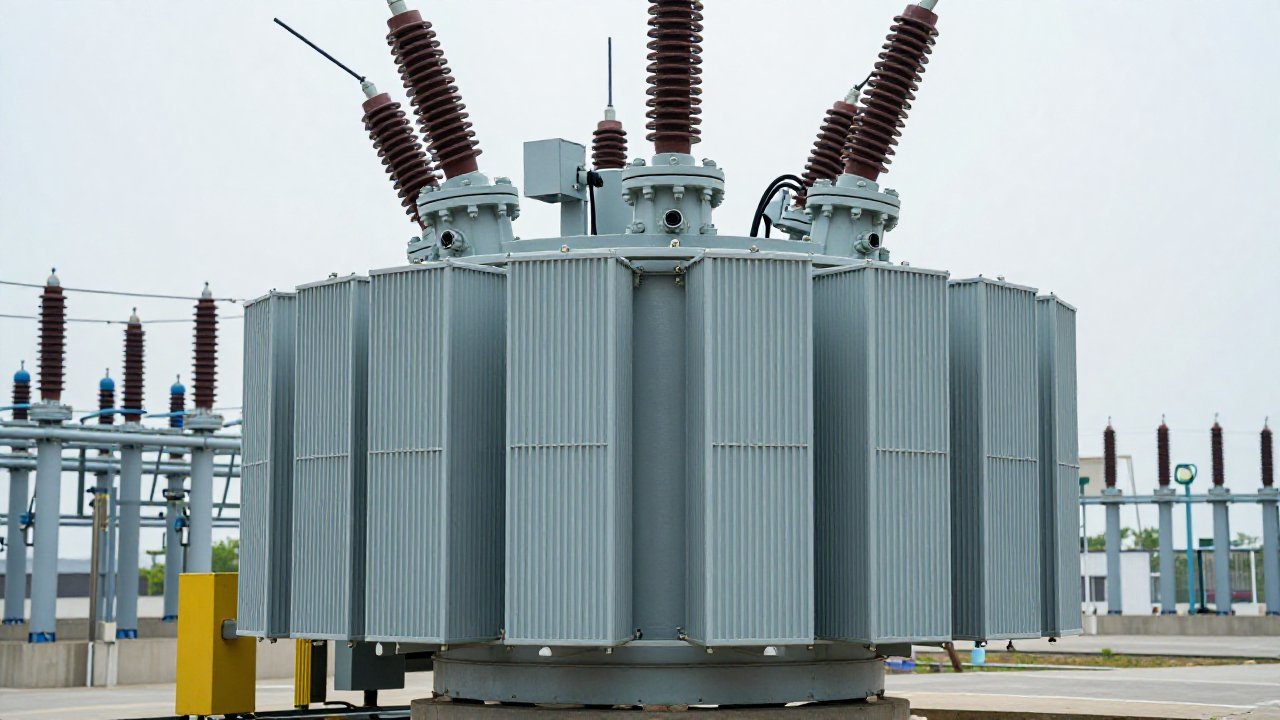
Every power transformer contains thousands of liters of insulating oil. When this oil is subjected to thermal or electrical stress, it decomposes — releasing a characteristic cocktail of dissolved gases. Understanding this chemistry is the foundation of all dissolved gas analysis (DGA).
The Chemical Building Blocks
Transformer mineral oil is a complex mixture of hydrocarbon molecules — primarily alkanes (paraffins), cycloalkanes (naphthenes), and aromatic hydrocarbons. These molecules are composed of carbon and hydrogen atoms arranged in chains, rings, and branched structures. The carbon-carbon (C-C) and carbon-hydrogen (C-H) bonds that hold these molecules together have specific bond energies — and when thermal or electrical energy exceeds these bond energies, the molecules break apart.
The key bond energies relevant to transformer oil decomposition:
| Bond Type | Bond Energy (kJ/mol) | Fault Temperature |
|---|---|---|
| C-H (aromatic) | 460 | >300°C |
| C-H (aliphatic) | 410 | >200°C |
| C-C (single) | 348 | >150°C |
| C=C (double) | 614 | >500°C |
| C≡C (triple) | 839 | >700°C |
This bond energy hierarchy explains why different fault types produce different gas patterns. Low-temperature thermal faults (<300°C) break only the weakest C-C single bonds, producing primarily methane (CH₄) and ethane (C₂H₆). High-temperature faults (>500°C) break stronger bonds, producing ethylene (C₂H₄). Only arcing (>700°C) provides enough energy to form the carbon-carbon triple bond in acetylene (C₂H₂).
The Seven Key Fault Gases
| Gas | Formula | Formation Temp | Primary Fault Association |
|---|---|---|---|
| Hydrogen | H₂ | >100°C | Partial discharge, corona — the universal early warning gas |
| Methane | CH₄ | >150°C | Low-temperature thermal faults, stray gassing of new oil |
| Ethane | C₂H₆ | >200°C | Low-to-medium temperature thermal faults |
| Ethylene | C₂H₄ | >300°C | High-temperature oil overheating (>500°C) |
| Acetylene | C₂H₂ | >700°C | High-energy arcing and discharges — the arc signature gas |
| Carbon Monoxide | CO | >105°C | Cellulose (paper) thermal degradation |
| Carbon Dioxide | CO₂ | Broad range | Cellulose aging and general oxidation |
Oil Types and Their Gas Signatures
Different insulating oils produce different gas patterns under the same fault conditions — a critical consideration for DGA interpretation.
Mineral Oil: The most common transformer oil. Produces all seven fault gases in well-characterized ratios. The Duval Triangle and IEC/IEEE ratio methods were developed primarily for mineral oil. Gas generation rates are well-documented across the full temperature spectrum.
Natural Ester (FR3, BIOTEMP): Vegetable-oil-based dielectric fluids. Produce significantly more ethane (C₂H₆) and less ethylene (C₂H₄) than mineral oil under thermal stress. The CO₂/CO ratio is inherently higher due to the oxygen content in ester molecules. Standard mineral-oil DGA interpretation limits do not directly apply — ester-specific correction factors are required.
Synthetic Ester (MIDEL 7131): Similar gas patterns to natural esters but with more consistent batch-to-batch properties. Still requires ester-specific interpretation — applying mineral oil thresholds will produce false positives.
Silicone Oil: Primarily used in specialty applications (high-temperature, fire-sensitive). Produces different hydrocarbon distributions due to the silicon-oxygen backbone — DGA interpretation for silicone oil is less standardized and typically requires manufacturer-specific guidance.
Why Dissolved Gas Analysis Works
The genius of DGA is that it detects faults at their earliest stages — long before they would be detectable by any other means. Partial discharge in a void inside solid insulation generates hydrogen that dissolves in the oil within hours. A developing hot spot on a winding generates methane and ethylene continuously. A loose connection that is sparking produces acetylene immediately.
Each fault leaves a chemical fingerprint in the oil — and because transformer oil circulates through the windings and core, a single oil sample (or a single online monitor) can detect faults anywhere in the transformer. This is why DGA is universally recognized as the single most powerful diagnostic tool for transformer condition assessment.
Continue to DGA Fundamentals → Explore Fault Types & Gas Signatures →