
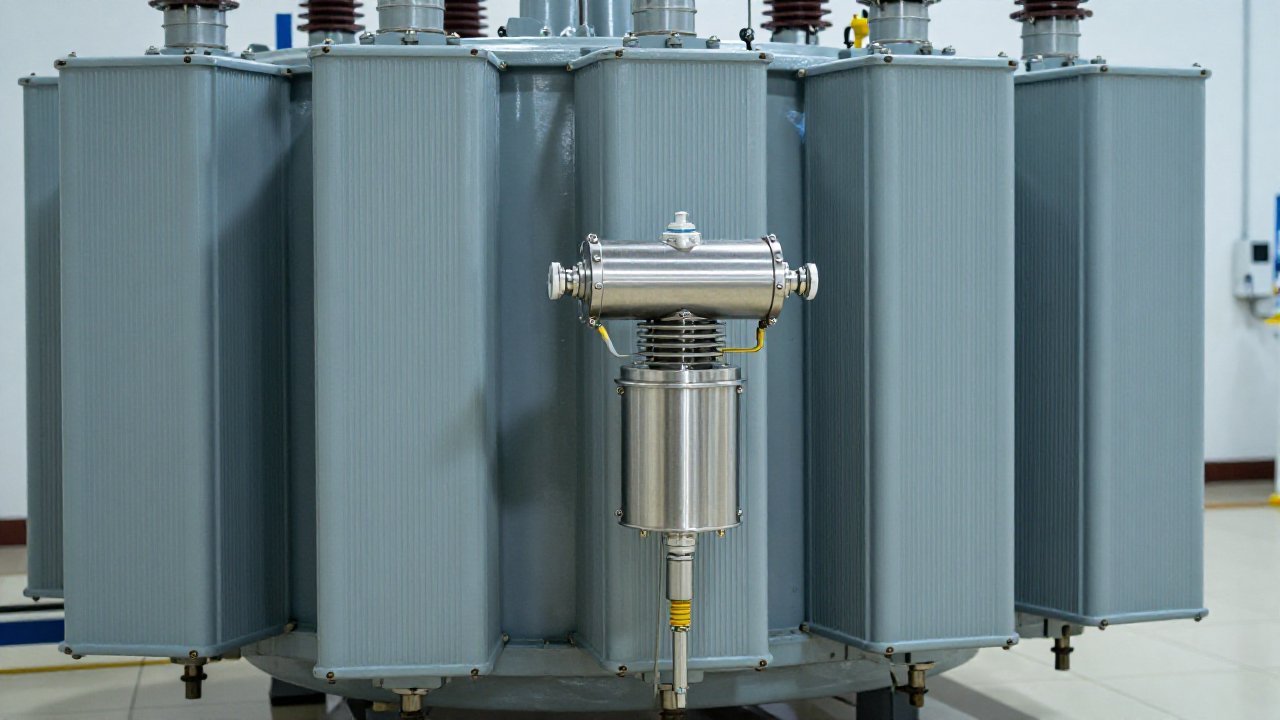
Bottom line first: Palladium (Pd) alloy thin films measure hydrogen with an elegant principle and excellent parameters. But the whole industry faces the same honest problem: short-cycle laboratory data is abundant, while “real oil-immersed, ten-years-in-service” long-term field data is scarce. This article does not dodge that — and it tells buyers how to verify it.
1. The principle: why palladium alloy suits dissolved hydrogen
- Hydrogen molecules dissolve directly into the palladium lattice, changing the film’s resistance → no degassing, no carrier gas.
- Hydrogen is the only gas with appreciable solubility in palladium, so a Pd-based sensor is near-selective for H₂ (“intrinsic hydrogen selectivity”).
- A Si₃N₄ oxygen-blocking layer prevents palladium oxidation (PdO) and extends life.
Result: directly oil-immersed, degassing-free, calibration-free, consumable-free — which is exactly what makes it attractive.
2. The honest part: long-term data is scarce
In the academic literature, most stability data for palladium alloys covers short periods:
| Material | Observation period |
|---|---|
| Pd₀.₈Ni₀.₂ nano-alloy | 180 days (signal retained >78%) |
| Pd nanowire array (PdNWA) | 150 days |
| PdAu alloy | 60 days |
| Pd/Ag optical fiber | 100 hours / 50 cycles |
Extrapolating these “months-scale” lab figures out to 10–15 years in the field is a leap everyone makes but no one has fully proven.
On the engineering side, the only vendors willing to give a long-term commitment are H2scan (10-year sensing-element warranty) and Hitachi CoreSense (“up to 15 years”) — but they too have published no verifiable third-party long-term comparison data.
This is not one vendor’s shortcoming — it is a shared subject for the entire palladium-alloy route.
3. Why it drifts (the part engineers want)
The main long-term risks of palladium alloys:
- Alloy “poisoning”: sulfur, CO and halogens in the oil occupy palladium’s active sites.
- Lattice phase transition (α→β): at high hydrogen concentration the lattice expands, and repeated cycling causes fatigue.
- Temperature drift: requires precise temperature compensation.
- Cross-gases: although selective, high concentrations of CO and C₂H₂ can still interfere.
Countermeasures (the publicly described technical paths):
- Alloying: Pd-Ni, Pd-Cu, Pd-Au to raise the phase-transition threshold and resist poisoning.
- Coatings / oxygen-blocking layers: Si₃N₄ and similar.
- Temperature-compensation circuitry.
4. How buyers should verify (the most valuable part)
Don’t just read “LOD 5 ppm” off a datasheet. To verify long-term reliability, require:
| Requirement | Concrete action |
|---|---|
| Field-installation ledger | Provide verifiable model, quantity, commissioning year and operating hours |
| Third-party comparison | Long-term parallel comparison against laboratory DGA or headspace GC, with a correlation coefficient R² (target ≥0.99) |
| Drift curve | Provide ≥3 years of zero/span drift data |
| Accelerated-aging report | Aging-test data under high-temperature/humidity or hydrogen cycling |
| Oil-type change verification | Long-term performance on ester oils |
In one line: whoever can produce verifiable long-term field data is the one truly worth trusting. Anyone can write specs on paper; field data cannot be faked.
5. PAS DGA’s position
Our approach is to state things clearly first:
- The parameter advantages of the palladium-alloy route are real;
- Long-term field data is homework the whole industry still owes;
- We are willing to open the verification methods to customers — field comparison, drift curves, verifiable ledgers.
Technology choices should rest on verifiable, honest data — not on marketing copy.
Materials data cited from public literature reviews; manufacturer life claims cited from their public documents.
William Xiong — Shenzhen Feso Automation Technology Co., Ltd (PAS DGA) · DGA-500 palladium-alloy dissolved-hydrogen sensor
inquiry@pasdga.com · https://pasdga.com
If you would like to design a field-verification method together (comparison plan / drift data / ledger definitions), we welcome the conversation.