
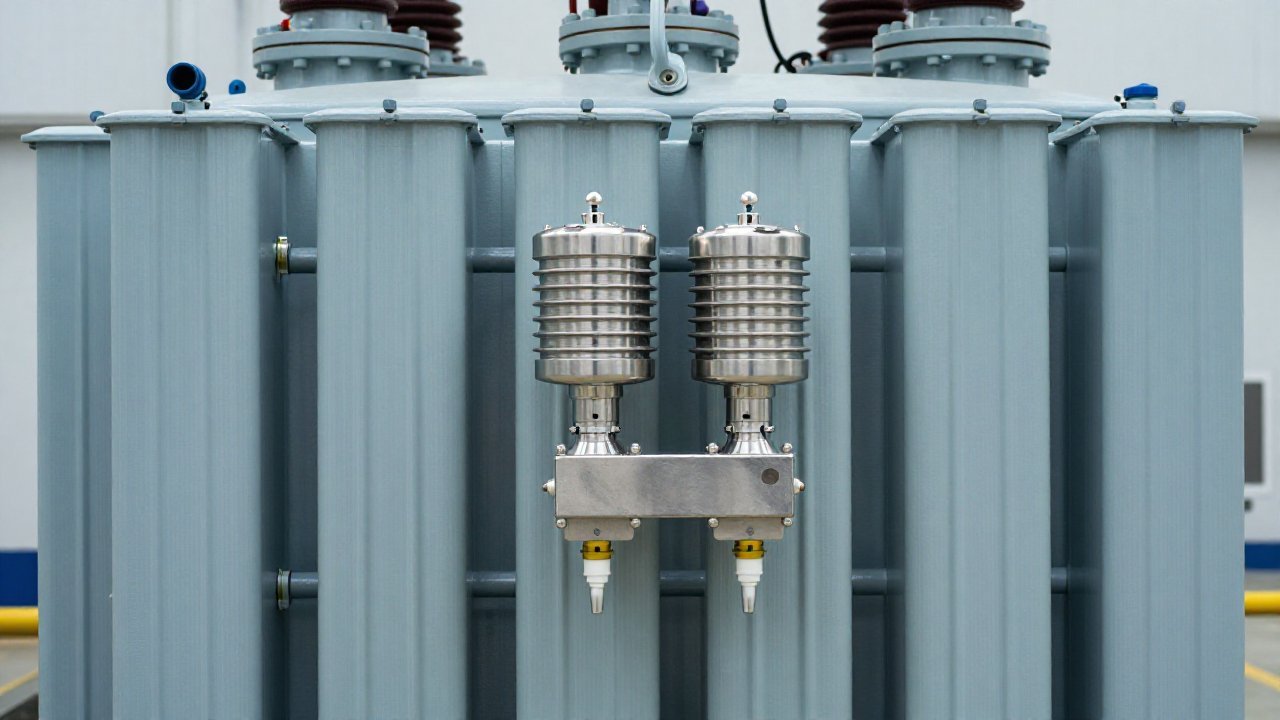
Bottom line first: Before any gas can be measured, every DGA unit (except a directly oil-immersed hydrogen sensor) must first drive the gas out of the oil. Whether it uses vacuum, headspace or a membrane directly sets the reading’s error, speed and long-term reliability. The same oil, analyzed by different degassing methods, can yield results that differ by a substantial margin.
Choosing a DGA is half about the detector — and the other half is about the degassing method, which is often overlooked.
1. The four mainstream degassing routes
| Method | Principle | Speed | Maintenance | Examples |
|---|---|---|---|---|
| Vacuum (Toepler / partial degassing) | Draw a vacuum to pull gas out | Minutes, but long cycle | Pump/valve wear (OPT100 creates vacuum with an oil-column piston, no vacuum pump) | Vaisala OPT100 (partial vacuum), Mitsubishi N-TCG |
| Headspace | Oil + a small carrier-gas volume reach partition equilibrium | 5–30 min | Carrier-gas-free | GE Kelman, MR, Siemens |
| Membrane extraction | Gas permeates a PTFE / hollow-fiber membrane | Flat sheet >24 h; hollow fiber 4–8 h | Membrane wetting / aging | GE Hydran, Serveron TM8, Doble Calisto |
| Stripper column | Carrier gas bubbles the gas out | Fast | Carrier gas + column | ASTM D3612 Method B |
Note: a directly oil-immersed palladium-alloy hydrogen sensor (such as the PAS DGA-500) skips the entire degassing stage — hydrogen dissolves straight into the film.
2. Three easily misjudged points
Point one: low headspace “recovery” does not mean headspace is inaccurate
Headspace recovery looks low (C₂H₆ around 1%), but once the gas-chamber concentration is back-calculated through the Ostwald coefficient, its accuracy can match the vacuum method.
One classic comparison: headspace passed 21 of 28 samples (75%), better than the best vacuum-method laboratory (18 of 28, 64%), with overall repeatability of about 4%.
Low recovery is an inherent property of headspace, not a defect. Using the recovery figure to disparage headspace is an amateur talking point.
Point two: membrane methods suffer “wetting failure”
A PTFE membrane keeps water and oil out through high crystallinity and strong hydrophobicity. But after long-term oil immersion, the pores become wetted and blocked — once the mass-transfer path fails, the reading is finished. This is why:
- Serveron’s manual explicitly warns that “vacuum will permanently damage the extractor membrane”;
- the equilibrium time of a flat-sheet membrane for ethane often exceeds 72 hours — it simply cannot be marketed as “real-time”.
Point three: vacuum-pump methods are being phased out
Early domestic GC units largely used vacuum-pump degassing, with a clear problem: pump wear → declining extraction efficiency → a one-sidedly low reading with poor repeatability. Domestic online units now largely moved to dynamic headspace / vacuum bubbling.
3. Why this decides your reading
The degassing method decides three things:
- Error magnitude: methods differ in their ability to extract heavy hydrocarbons and CO₂ (heavy hydrocarbons are 20–40× more soluble than H₂ and hardest to remove).
- Response speed: headspace 5–30 min, membrane up to several hours — which directly affects how timely a fault warning can be.
- Long-term drift: membranes wet, pumps wear, stripper columns retain residue — consumables determine life.
What this means for procurement:
- Want speed: headspace > vacuum > membrane.
- Want low maintenance: headspace / degassing-free > membrane > vacuum pump.
- Want no long-term drift: a directly immersed (degassing-free) structure is the simplest — but it covers only one component, hydrogen.
4. Is there a single best answer?
The reality: no single degassing method can measure all 7 gases quickly, accurately and maintenance-free at once.
So the industry’s mainstream approach is to divide the work:
- Multi-gas diagnosis runs on headspace or membrane (7 gases, enabling Duval / ratio methods);
- Critical hydrogen is handed to a directly oil-immersed palladium-alloy sensor — degassing-free, maintenance-free, fast.
This is the PAS DGA product philosophy as well: the DGA-500 does not replace a multi-gas analyzer — it turns the most critical hydrogen channel into a degassing-free solid-state solution.
Degassing principles and recovery data cited from IEC 60567:2023, ASTM D3612, GB/T 17623 and public literature such as Jalbert (1994), plus manufacturer manuals.
William Xiong — Shenzhen Feso Automation Technology Co., Ltd (PAS DGA) · DGA-500: directly oil-immersed, degassing-free, carrier-gas-free, dedicated to the critical dissolved-hydrogen channel
inquiry@pasdga.com · https://pasdga.com
To discuss degassing methods for a specific application, or learn more about the PAS DGA-500, we welcome the conversation.