
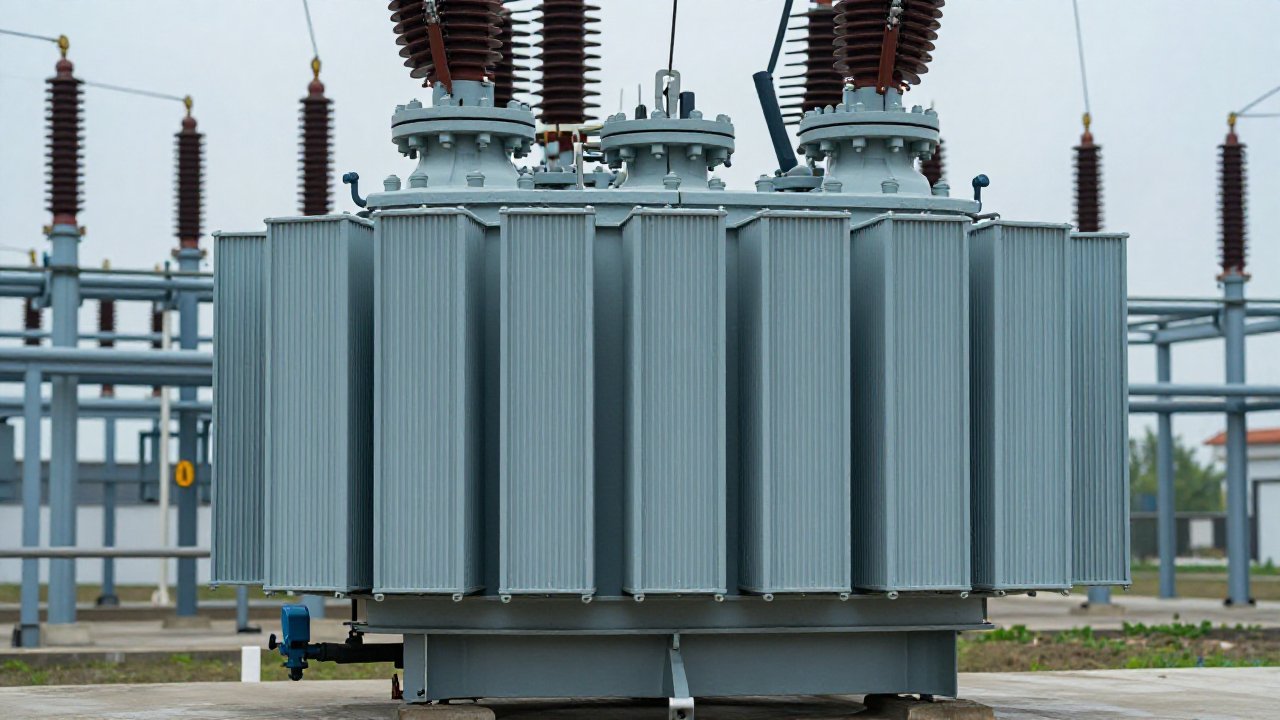
A September 2026 decision point for online gas monitoring
When the Dutch Transformer Day meets in Doorwerth on 17 September 2026, A-Eberle is presenting an oil-stick probe that measures breakdown voltage, water content, temperature and dissolved hydrogen plus carbon monoxide in a single online unit. A market analysis released in early September 2026 projects the global dissolved gas analyzer market at about $415 million in 2025 and roughly $683 million by 2032, attributing the growth to the shift from periodic sampling to continuous monitoring. Together they frame a real purchasing question: a dedicated dissolved hydrogen sensor for transformers, a combined dielectric-gas probe, or a full nine-gas monitor?
Why hydrogen is the first gas worth watching
Hydrogen appears early and diffuses fast. Partial discharge, corona and low-temperature overheating all generate H₂ while the oil still looks healthy, so dissolved gas analysis (DGA) treats it as the earliest marker of an incipient fault. China’s Order No. 41, the grid-safety rules effective July 2026, set a hard compliance line: dissolved hydrogen above 450 µL/L on a ±800 kV DC or 1000 kV AC transformer counts as a major accident hazard.
A dedicated dissolved hydrogen sensor for transformers pairs an oil-permeable membrane with a hydrogen-selective element such as a palladium thin film, so it responds to H₂ while the heavier fault gases pass by without disturbing the reading. That selectivity keeps the measurement stable on the day ethylene or acetylene suddenly appears.
Three monitor classes on the 2026 market
The old either-or between a hydrogen alarm and a lab chromatograph has widened into three practical classes:
| Class | What it measures | Best fit | Relative cost |
|---|---|---|---|
| Dedicated H₂ monitor | Dissolved hydrogen, oil temperature | Fleet screening, distribution and aging units | Low |
| Combined dielectric-gas probe | H₂, CO, moisture and breakdown voltage | Tap-changer compartments, moisture-driven aging | Mid |
| Multi-gas DGA monitor | Eight to nine gases plus moisture | Critical 220 kV+ units, fault follow-up | High |
Each class answers a different question. A combined probe watches oil quality, which matters where on-load tap changers work hard. A multi-gas monitor answers “what kind of fault.” A single-gas unit answers “has something started,” at a small fraction of the installed cost.
Where each class fits
- Distribution, pad-mounted and hard-to-reach units — a dedicated hydrogen sensor per transformer, or multiplexed across a small group, gives an early tripwire without a large capital bill.
- Tap-changer compartments or a known moisture problem — add a combined probe so dielectric strength and dissolved-gas parameters are tracked together.
- Transmission assets above roughly 220 kV, converter transformers and units with a fault record — a nine-gas monitor, because these assets need diagnosis rather than just an alarm.
Plan the upgrade before the alarm. Move a unit up when its hydrogen trend shows a sustained rate of rise, after a fault is confirmed and its type must be tracked, or when criticality rises. In most fleets only a handful of units ever earn a nine-gas monitor; the rest need a reliable early signal.
What to check on any spec sheet
- Range and repeatability — a 5 to 5000 ppm window covers normal oil through serious fault levels.
- Response time (T63) — the time to reach 63 % of a step change, set by membrane area, oil flow and temperature.
- Calibration and drift — how often the reading is verified and whether the sensor self-checks.
- Operating envelope — enclosure rating and tolerance to oil-temperature swings.
- Form factor — finished monitor, OEM probe, or a unit multiplexed across several tanks.
Whichever dissolved hydrogen sensor for transformers you shortlist, ask for each of these lines in writing.
How often does a dissolved hydrogen sensor for transformers need calibration?
It depends on the sensing element. Membrane-coupled palladium-film sensors drift slowly and are usually verified against a reference gas on a schedule measured in months; electrochemical cells age faster and need more frequent checks. Confirm the reading against a laboratory oil sample after commissioning, then follow the manufacturer’s interval and re-check after any major gas event.
How fast should a transformer hydrogen sensor respond?
Judge by the T63 step-response time rather than the measurement cycle. A membrane-based unit settles in minutes to tens of minutes depending on oil flow and temperature — fast enough to catch a developing fault well before the next scheduled oil sample, even if it is slower than a direct oil-immersion probe.
PAS DGA: a hydrogen start with a nine-gas path
PAS DGA builds the whole ladder. The DGA-500 field-standard hydrogen monitor and the DGA-300 OEM probe cover the 5–5000 ppm dissolved hydrogen range (vendor data), while the DGA-900 laser photoacoustic system adds eight more gases plus moisture when a unit needs full diagnosis. Start with a dissolved hydrogen sensor where coverage matters most, and keep the nine-gas option for the transformers that earn it. Contact PAS DGA with your fleet size and voltage classes for a sensor-by-sensor recommendation.