
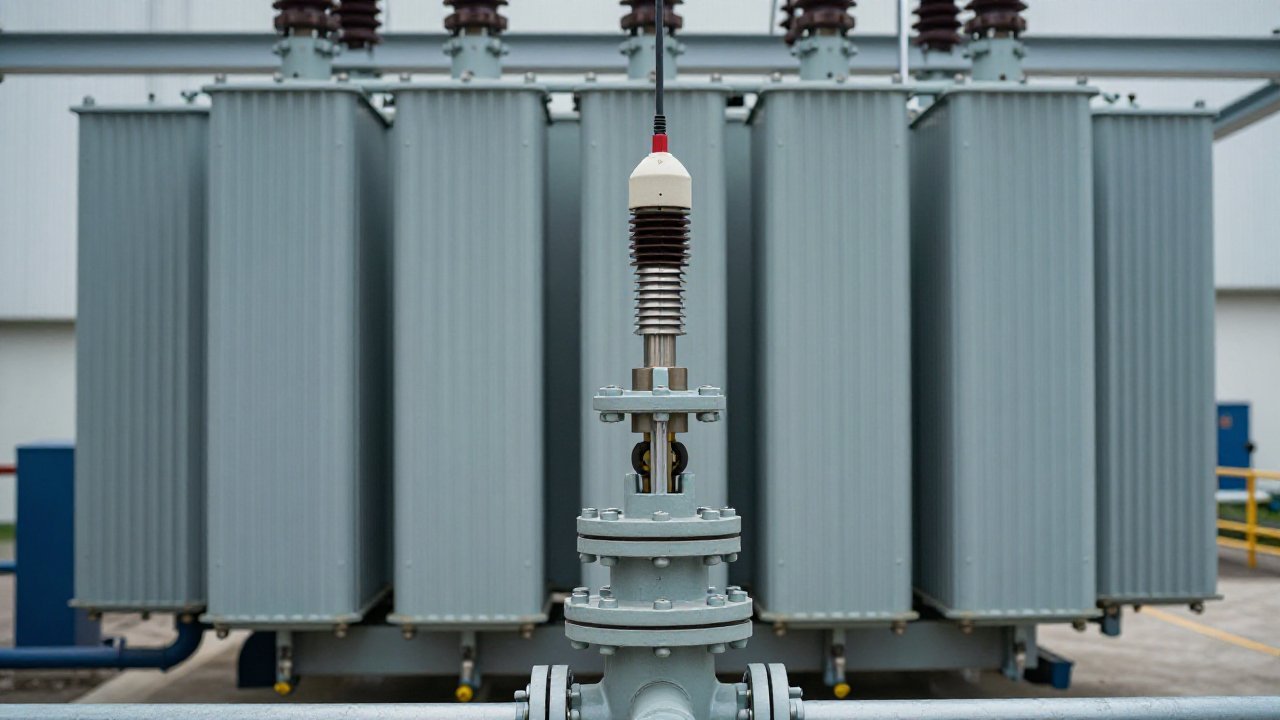
September 2026 offered two signals about where transformer gas monitoring is heading. Transformer Technology gave its September issue to insulation-system innovation, including the tangled relationship between water content and dissolved gas analysis, and the Transformatordag 2026 programme on 17 September features a single sensor that reads oil breakdown voltage, water content and two key gases at once. More parameters on fewer devices is progress — until a transformer dissolved hydrogen sensor raises a high-hydrogen alarm that turns out to have nothing to do with the transformer.
That matters more than it sounds. When monitors cry wolf, operators mute the alarms or take them out of service, and the early-warning value is lost. Nearly every false alarm has one of a handful of causes, each with a check that clears or confirms it.
Two families of false alarm
The first step is separating a measurement problem from a genuine gassing event that simply is not a fault. In the first family the instrument or the sample is wrong: air has entered the oil, a lab syringe has leaked hydrogen, or a sensor has drifted. In the second, hydrogen really is rising but the cause is benign. The distinction decides what you do next — recalibrate and resample, or keep watching the trend.
Symptoms, and what clears each cause
| Cause | What you see | How to rule it out |
|---|---|---|
| Air ingress (gaskets, oil handling) | Oxygen and nitrogen rise together with hydrogen | Compare the O₂/N₂ ratio with the ~21/78 atmospheric ratio; pressure-test fittings; resample without exposing oil to air |
| Sampling error | Lab result disagrees with the monitor, or repeats scatter | Sample closed into an aluminium bottle or gas-tight syringe, fill it completely, ship without air contact |
| Sensor drift | A slow offset with no matching change in other gases | Verify against a laboratory sample and a reference-gas span check; examine baseline offset, not just the reading |
| Oil-type and temperature mismatch | Monitor and lab differ by a roughly constant factor | Correct for the actual oil and temperature; standards calculate gas volumes at different reference temperatures |
| Stray gassing | Hydrogen rises at low temperature with no other fault gas | Apply ASTM D7150 logic and watch the rate of rise rather than a single value |
| Load-driven hydrogen | Hydrogen tracks the daily load and oil-temperature cycle | Correlate the trend against load and top-oil temperature before alarming |
Hydrogen is the lightest gas in the set and the easiest to lose or gain by accident. Poor sampling technique lets volatile hydrogen escape from a syringe, while a sample exposed to air absorbs oxygen and nitrogen; the resulting numbers can look like a fault that does not exist. The fix is consistent across published guidance — oil must not meet air between the valve and the container, and the container must end up full. On the online side, a weeping gasket or a badly purged oil line does the same thing, and the tell is a simultaneous O₂ and N₂ rise that a real fault would not produce.
Not every disagreement is an error. Laboratory analysis under IEC 60567 carries a total uncertainty of roughly ±15 %, and the common standards calculate dissolved-gas volumes at different reference temperatures, so identical oil can be reported at different concentrations. One sample rarely settles the argument; several cycles usually do.
FAQ: What causes false positives on a transformer dissolved hydrogen sensor?
Four mechanisms account for most of them: air ingress, which shows up as oxygen and nitrogen rising together; sampling error, where the container rather than the transformer is the problem; sensor drift, visible as a slow offset with no matching movement in other gases; and a benign gassing source such as stray gassing or load-driven hydrogen.
FAQ: How do I tell stray gassing from a real fault?
Mineral oil can generate hydrogen at low temperatures without any electrical or thermal fault, which is why ASTM D7150 exists as a separate assessment; our guide to stray gassing in transformer oil covers the handling. Real faults usually bring other gases with them, so hydrogen rising alone at low temperature, with a flat profile elsewhere, is a reason to keep watching rather than to act.
Designing out the nuisance alarm
A rate-of-rise rule alongside absolute thresholds is the industry’s answer: slow drift is separated from a genuine step change, and short spikes stop tripping alarms. Condition bands help too — IEEE C57.104-2019 rates oil from Condition 1 to Condition 4 and ties re-test intervals to each band, so a reading that is high but flat does not trigger the same response as one climbing fast.
The sensor matters as well. A palladium thin-film element responds only to hydrogen, avoiding the cross-sensitivity that pulls multi-gas sensors into false readings, and a stable baseline keeps rate-of-rise logic meaningful over years. That is the design behind the PAS DGA hydrogen sensor range, which is why we pair a transformer dissolved hydrogen sensor with trend analysis and the dissolved hydrogen baseline rather than a single threshold. The DGA-900 nine-gas monitor supplies the full profile where a reading needs confirming; see also our PD versus DGA comparison.