
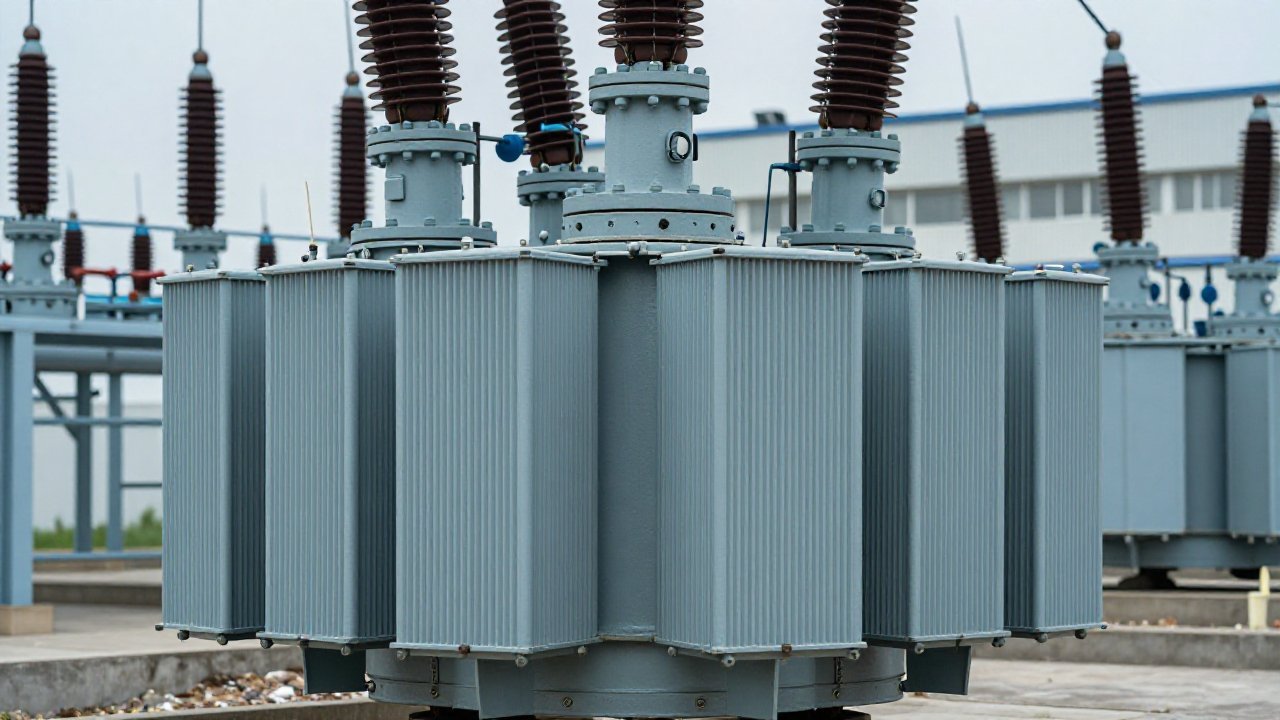
In 2026 the first international interpretation guide written specifically for ester transformer fluids appeared: IEC 63585:2026, prepared by IEC TC 10 and adopted in Europe as EN IEC 63585:2026. Its subject is dissolved gas analysis (DGA) in natural and synthetic esters. Until recently, DGA in ester transformers was read with rules built for mineral oil and a large dose of caution, because the two fluids do not behave the same way.
The timing matters. Ester-filled units have moved from wind, solar and traction duty into distribution networks, industrial plants and power transformers, including designs with on-load tap-changers. More units means more DGA samples, and more confusion about which readings are actually normal.
The same gases, a different signature
An ester-filled transformer produces the same basic fault gases as a mineral-oil unit — hydrogen (H₂), methane, ethane, ethylene, acetylene, carbon monoxide and carbon dioxide — but in different proportions and at different rates. That is why DGA in ester transformers needs its own guidance rather than a copy of the mineral-oil playbook.
| Feature | Mineral-oil transformer | Ester-filled transformer |
|---|---|---|
| CO / CO₂ background | Rises with cellulose ageing | Higher from the fluid itself; a high CO/CO₂ reading can be normal |
| Low-temperature thermal faults | IEC 60599 / IEEE C57.104 ratio zones | Different ethane and CO₂ share; biggest gap below roughly 700 °C |
| Fresh-fluid behaviour | Stray gassing possible in some hydrotreated oils | Natural esters can show their own stray-gassing signature after energising |
| Diagnostic rules | Rogers / Doernenburg / IEC 60599 codes, IEEE C57.104 limits | IEC 63585:2026, IEEE C57.155, ester-adapted Duval triangles |
Run mineral-oil ratio codes on ester data and a healthy unit can look alarming, or a genuine fault can look unremarkable. Closing that gap is the point of the new standard.
What the new IEC guide provides
IEC 63585 covers natural esters to IEC 62770 and synthetic esters to IEC 61099, and walks operators through gas generation, interpretation methods, guide values, recommended actions and examples of faulty equipment. Its guide values are reference percentiles drawn from a population of ester units, not pass/fail condemnation limits: the document is explicit that trending a transformer against its own history beats comparing a single sample with a table. It is advisory, so any resulting action still needs engineering assessment.
Two scope points matter. Switching equipment is excluded for lack of DGA data, and mono- or blended esters to IEC 63012 sit in an annex with limited information. A fleet that mixes fluids should judge each unit against the guide for its own liquid, not a blended average.
Where hydrogen still fits in DGA in ester transformers
The first line of defence does not change. Hydrogen is still the earliest gas to form across partial discharge, thermal and arcing faults, and it diffuses through oil faster than larger hydrocarbon molecules, so it reaches a sensor first. DGA in ester transformers still starts with hydrogen — what changes is how a hydrogen rise is read. A fresh natural-ester unit can give off hydrogen and methane shortly after energising with no active fault, so a single high reading should start a trend check rather than a shutdown. The reliable trigger is a sustained rate of rise against the unit’s own baseline (see our rate-of-rise analysis guide).
When hydrogen does ramp, confirm with a full dissolved-gas panel interpreted for esters — online via a multi-gas monitor, or in the laboratory. Forcing the result through a mineral-oil Duval zone or a Rogers code is where ester fleets go wrong; the ester-adapted triangle in IEC 63585 and IEEE C57.155 exists for that reason.
FAQ: Can I use the same DGA gas ratios on an ester transformer?
Not directly. The Rogers, Doernenburg and IEC 60599 ratio codes were calibrated on mineral-oil behaviour; because ester fluids generate the same gases in different proportions, a ratio can point to the wrong fault zone. Use the ester-specific method in IEC 63585:2026 or IEEE C57.155, treat a ratio verdict as a hypothesis and confirm it against the gas trend.
FAQ: Is hydrogen still the first gas to monitor in an ester transformer?
Yes. Hydrogen remains the fastest-diffusing early indicator across fault types in ester-filled units, which is why an online dissolved hydrogen monitor still works as the tripwire. The nuance is baseline: a fresh natural-ester unit can release hydrogen without a fault, so set alarms on rate of rise against the unit’s own history rather than on an absolute ppm value taken from a mineral-oil rule.
PAS DGA: monitoring that fits the new ester guidance
Interpreting DGA in ester transformers starts with good trend data. The PAS DGA hydrogen sensors — the DGA-500 field monitor and the DGA-300 OEM probe — track dissolved hydrogen across the 5–5000 ppm range (vendor data) and show whether the gas is a plateau or a ramp; confirm with the supplier that the sampling interface and calibration suit the ester fluid in your unit. When a hydrogen rise needs classification, the DGA-900 adds a nine-gas panel plus moisture so the result can be read against the ester-specific rules. Our dissolved hydrogen sensor compliance guide covers the wider monitoring picture. Contact PAS DGA to discuss an ester-filled transformer where the old DGA rules of thumb no longer feel reliable.