
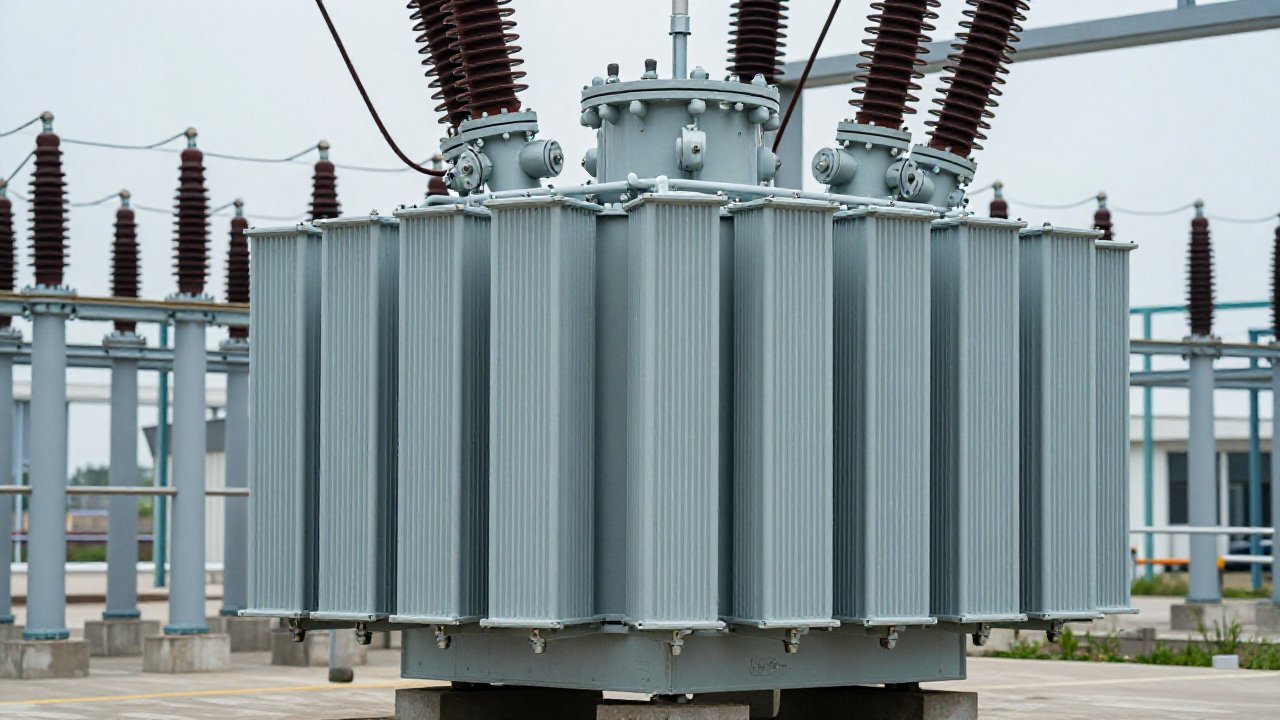
A CIGRE 2026 reminder: low-temperature gas is not always a fault
Research presented at the CIGRE Paris Session 2026 (23–28 August) compared classical DGA codes with machine-learning diagnosis and found what many asset managers already suspect: conventional methods stay transparent, but they can miss early-stage degradation and mixed fault mechanisms until thresholds are crossed. A routine dissolved gas analysis (DGA) flag can also misfire in the opposite direction — alarming on gas that is not a fault at all. One of the classic causes is stray gassing in transformer oil, where the oil itself releases hydrogen at normal operating temperature and no fault actually exists.
What stray gassing in transformer oil is
Stray gassing is the production of gases by the insulating liquid itself under thermal stress at low temperature — roughly 120 °C and below — with no electrical stress involved. Certain oils do it more than others: some severely hydrotreated mineral oils, and oils carrying contamination, can give off hydrogen plus a little methane at temperatures far below the range where a genuine fault develops. The behaviour is not restricted to aged oil; a fresh oil charge can stray-gas right after commissioning, which makes the first-year baseline surprisingly noisy.
The laboratory method for measuring this tendency is ASTM D7150, which heats the oil to 120 °C for 164 hours — long enough to reach a stable gassing pattern — while sparging with dry air or dry nitrogen. Method A tests the oil as received; Method B passes it through an attapulgite clay column first, to separate the effect of contamination from the oil’s own chemistry. Air-sparged oils typically produce a higher share of hydrogen, while nitrogen-sparged oils produce more hydrocarbons relative to H₂. The standard is written for mineral oil but can be extended to other insulating liquids that are monitored with ASTM D3612.
How stray gassing fools a DGA alarm
Because hydrogen is the earliest marker of partial discharge and thermal faults, a jump in H₂ is normally read as the first sign of trouble under IEC 60599 and IEEE C57.104. When stray gassing in transformer oil is the cause, that jump can be large and still be harmless, so the interpretation needs more evidence than the gas value alone.
| Feature | Real developing fault | Stray gassing |
|---|---|---|
| Dominant gases | H₂, then CH₄/C₂H₆/C₂H₄ ladder as temperature rises | H₂ with some CH₄; little ethylene or acetylene |
| Trend | Sustained or exponential rise | Rises, then plateaus; often follows oil temperature |
| Load / temperature | Weak correlation; can continue at low load | Stronger; H₂ tends to fall as the oil cools |
| Electrical checks | May show PD, winding or bushing anomalies | Clean |
| ASTM D7150 | Not needed for diagnosis | Classifies the oil as stray-gassing |
A single sample cannot separate the two cases, which is why one-point alarms misfire on stray gas. The reliable separation is the rate of rise combined with oil-temperature correlation — a step that plateaus is chemistry, a ramp that accelerates is a fault; see our rate-of-rise analysis guide. Gas ratios can actively mislead here: a stray H₂+CH₄ pattern can land in the partial-discharge or low-temperature zone of a Duval triangle and send the crew chasing the wrong fault, so treat any ratio verdict as a hypothesis until the trend agrees (see our Duval triangle guide).
FAQ: Is high hydrogen in transformer oil always a fault?
No. Fresh hydrotreated charges, contaminated oil and hot-running units can all hold a high hydrogen baseline without an active fault. The practical sequence is: confirm the reading with a second sample after a short interval, watch whether H₂ climbs steadily or flattens, compare it with oil temperature and load, and run electrical checks if the unit really looks suspicious. Escalate only when the rise is sustained, not when a single number is high.
FAQ: What does the ASTM D7150 stray gassing test do?
It classifies how much hydrogen and hydrocarbon gas a specific oil generates under low-temperature thermal stress, isolating the oil’s chemistry from fault processes. It is most useful when an unexplained hydrogen baseline appears on a unit whose electrical tests are clean, or when a new oil batch is being commissioned on a critical transformer. Once the oil is confirmed as stray-gassing, the monitor alarm philosophy can be set to rate-of-rise rather than an absolute hydrogen level.
PAS DGA: hydrogen monitoring that reads the trend, not the peak
The way to live with stray gassing is continuous hydrogen data, because only a continuous record shows whether the gas is a plateau or a ramp. The DGA-500 field monitor and the DGA-300 OEM probe track dissolved hydrogen across the 5–5000 ppm range (vendor data) and log the shape of the trend between oil samples. Pair that record with an annual laboratory DGA, classify suspect oil once with ASTM D7150, and set alarms on the rate of rise rather than the absolute value — the approach we describe in our dissolved hydrogen sensor compliance guide. Contact PAS DGA to review a transformer where hydrogen is high but the diagnosis is not yet clear.