
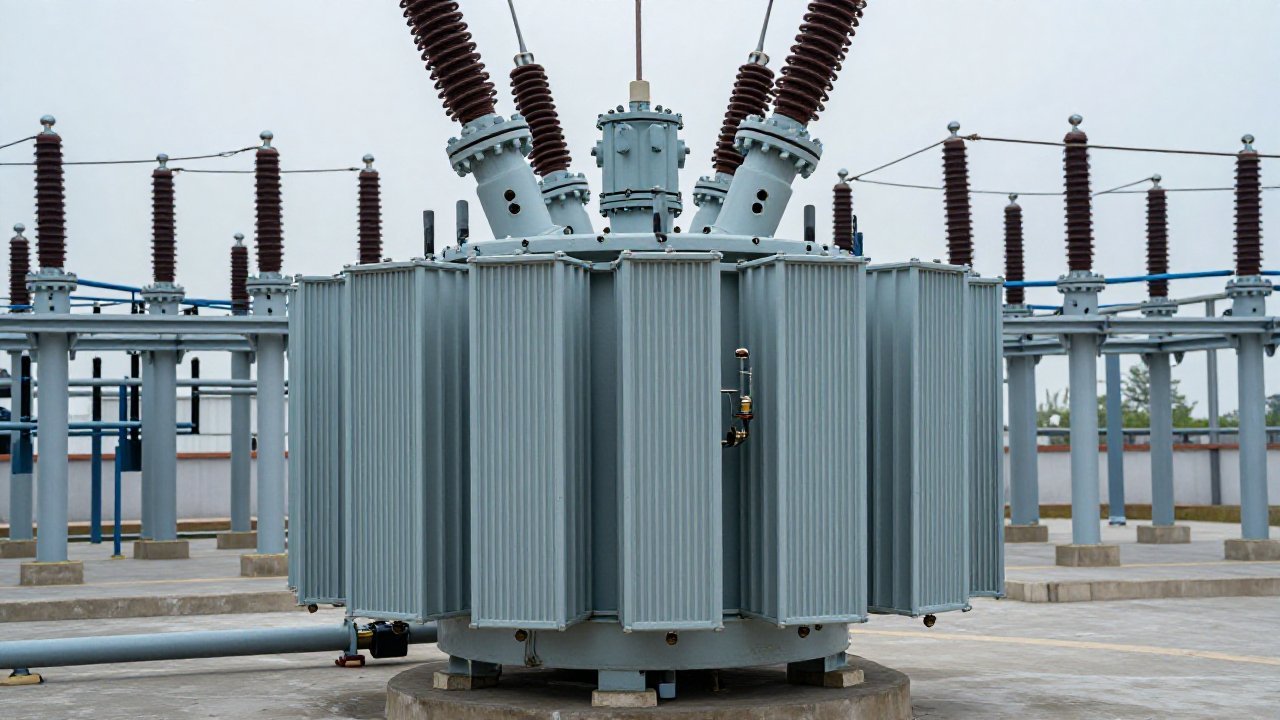
A case study added to IEEE Xplore in August 2026 follows online partial discharge (PD) monitoring of a 63 MVA refinery transformer in Europe and compares the discharge record with dissolved gas analysis (DGA) results. Its practical finding — the two techniques measure different timelines and often tell different stories — mirrors the pd vs dga question that now appears in most transformer monitoring RFQs. This guide covers what each method detects, why the results can disagree, and how to decide which one your fleet actually needs.
What PD and DGA each measure
Partial discharge monitoring listens for live electrical activity inside the insulation: corona, surface discharge and arcing, reported in picocoulombs and phase-resolved patterns. DGA reads the chemical trace those stresses leave in the oil. The two view the same machine from opposite ends — PD watches the event as it happens, while DGA watches the accumulated residue.
| Measurement | Dissolved gas analysis (DGA) | Partial discharge (PD) monitoring |
|---|---|---|
| What it senses | Fault gases dissolved in oil | Live discharge activity (pC, PRPD) |
| Fault coverage | Thermal + electrical + paper aging | Electrical (corona, surface, arcing) |
| Timeline | Accumulated, historical | Real-time, present |
| Localization | Not directly | Possible via acoustic or UHF arrays |
| Sampling model | Lab sample or online monitor | Offline test or online sensors |
Why the two techniques can disagree
A discharge must last long enough and carry enough energy to decompose oil and generate gas that dissolves and migrates to the sampling point. Brief or low-energy PD can leave no measurable gas trace, and a thermal fault can produce gas with no discharge signature at all. Past arcing leaves residual gas after the source has stopped, and recent oil treatment can mask a trend. The pd vs dga comparison usually starts with which technology is better; the more useful question is why they disagree — because those disagreements are information, not errors. They tell you which failure mechanism is active.
DGA first, for most transformers
Dissolved gas analysis remains the right baseline for a fleet because one measurement covers thermal faults, electrical faults and paper degradation, and it feeds the interpretation methods engineers already trust — key gas, gas ratios and the Duval triangle. Hydrogen is the first gas to appear in most developing faults, which is why a low-cost dissolved hydrogen sensor is the most economical continuous view across many units.
Regulation is reinforcing that baseline. China’s NDRC Order No. 41, effective 1 July 2026, makes dissolved hydrogen above 450 µL/L an enforceable hazard threshold for UHV converter transformers, and its acetylene step escalates quickly. Compliance programs are fitting online DGA on 220 kV and above units and hydrogen-only monitors on the rest.
When to add partial discharge — and when to run both
PD monitoring is the stronger tool when the risk is electrical: bushing defects, surface contamination and arcing. It can localize the source with acoustic or UHF sensor arrays, which DGA cannot do on its own, and it is part of factory acceptance testing for new transformers under IEC 60076-3. For a fast-developing discharge, an online PD channel sees the event immediately while a lab sample lags by days — the exact point made by the refinery case study. In the pd vs dga trade-off, this is the case where PD leads.
The workable rule is DGA everywhere, PD where electrical risk or failure consequence is high. Generator step-up units, intertie transformers and urban substations with limited redundancy are the textbook dual-monitoring cases, especially after internal repairs or an abnormal gas history. Rising acetylene — the signature of high-energy arcing — is a prompt to confirm PD coverage so the source can be located before a trip.
Can a DGA monitor detect partial discharge?
Indirectly. A DGA monitor sees the gas products that PD leaves behind — hydrogen from corona, acetylene from arcing — but it cannot say that a discharge happened just now, or where. A continuous hydrogen channel is the earliest gas-side warning; PD monitoring adds the real-time electrical confirmation and localization.
Which is better for early fault detection, PD or DGA?
It depends on the fault. Hydrogen is the earliest gas signal for most developing faults, so online dissolved hydrogen monitoring usually gives the first fleet-wide warning. PD is earlier for a purely electrical defect that has not yet generated measurable gas. Programs that want both sequence them: hydrogen and DGA across the fleet, PD targeted at the highest-risk units.
The pd vs dga decision is really a risk decision. Start with dissolved gas and hydrogen coverage as the baseline, add partial discharge where electrical faults or catastrophic failure would hurt most, and let the two datasets cross-check each other. When you draft an RFQ for a fleet, compare our dissolved hydrogen sensors and the nine-gas DGA-900 against the criticality of each unit.