
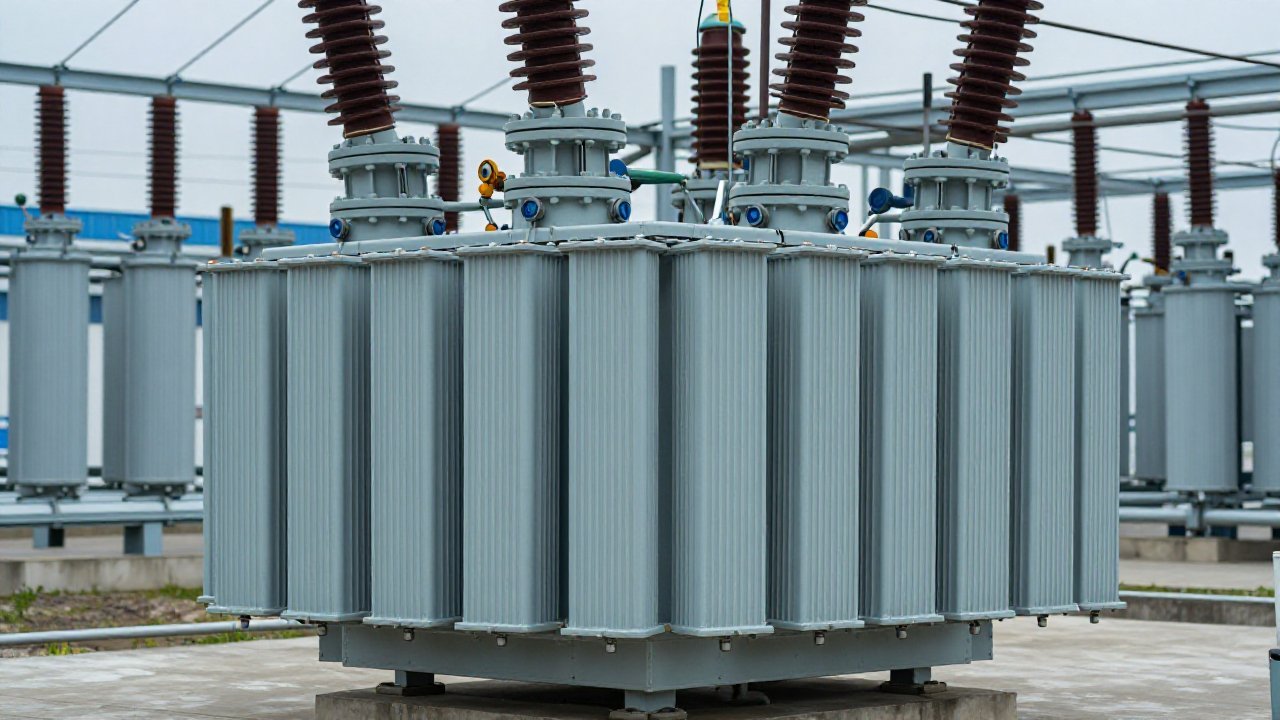
Two major international standards govern dissolved gas analysis interpretation: IEC 60599 (European/international) and IEEE C57.104 (North American). While both aim to achieve the same goal — reliable transformer fault detection through DGA — they differ in methodology, thresholds, and fault classification approach. Understanding these differences is essential for utilities operating across regulatory regions or managing mixed-origin transformer fleets.
IEC 60599: Ratio-Based Diagnostics
IEC 60599 (latest edition: 2022) uses gas ratio methods for fault diagnosis. The standard defines three key ratios — C₂H₂/C₂H₄, CH₄/H₂, and C₂H₄/C₂H₆ — each mapped to specific fault types through an interpretation table. IEC 60599 also incorporates the Duval Triangle method (Annex B) as a complementary diagnostic tool.
Key characteristics: Ratio-based approach reduces sensitivity to absolute concentration variations between transformers. Includes correction factors for in-service aging. Recognizes ‘stray gassing’ as a distinct phenomenon (gas production in healthy transformers). Duval Triangle provides deterministic classification — every gas combination maps to exactly one fault zone.
Limitations: Ratio methods can return ‘unresolved’ results when ratios fall outside defined ranges. Requires at least three gases above detection limits to calculate meaningful ratios. Less prescriptive about concentration-level alarm thresholds.
IEEE C57.104: Concentration-Based Condition Assessment
IEEE C57.104-2019 represents a major revision of the standard. The key change: moving from fixed ppm thresholds to a condition-based approach using percentages of 90th-percentile ‘L1’ limits derived from a large database of transformer DGA measurements.
Key characteristics: Four condition levels (1-4) based on gas concentrations as % of L1 limits. L1 limits vary by transformer age and type — a new transformer has different expected gas levels than a 30-year-old unit. TDCG (Total Dissolved Combustible Gas) used as a composite indicator. Requires knowledge of transformer-specific L1 limits.
Limitations: Requires access to L1 limit database or historical fleet data. Concentration-based approach can miss faults in large oil-volume transformers where gases are diluted. Less standardized across international boundaries.
Which Standard Should You Use?
| Scenario | Recommended Standard | Rationale |
|---|---|---|
| European/Asian utility | IEC 60599 | Regulatory requirement in most non-North American jurisdictions |
| North American utility | IEEE C57.104 | Industry standard; NERC compliance may reference IEEE |
| Global fleet (mixed origins) | Both + Duval Triangle | Duval Triangle is standard-agnostic and always produces a classification |
| New transformers (<5 years) | IEEE C57.104 (age-adjusted L1) | New transformers produce more stray gases; age-adjusted limits prevent false alarms |
| Aged transformers (>20 years) | IEC 60599 + trend analysis | Rate-of-change more important than absolute levels for aged units |
The Practical Answer: Use Both
In practice, most sophisticated DGA monitoring programs use both standards simultaneously. The DGA-900 LPAS monitor, for example, provides onboard calculation of Duval Triangle zones, IEC 60599 ratios, and IEEE C57.104 condition levels — giving operators a multi-method diagnostic picture from a single data stream. When all methods agree on a fault classification, confidence is high. When they disagree, the discrepancy itself is a diagnostic signal warranting further investigation.