
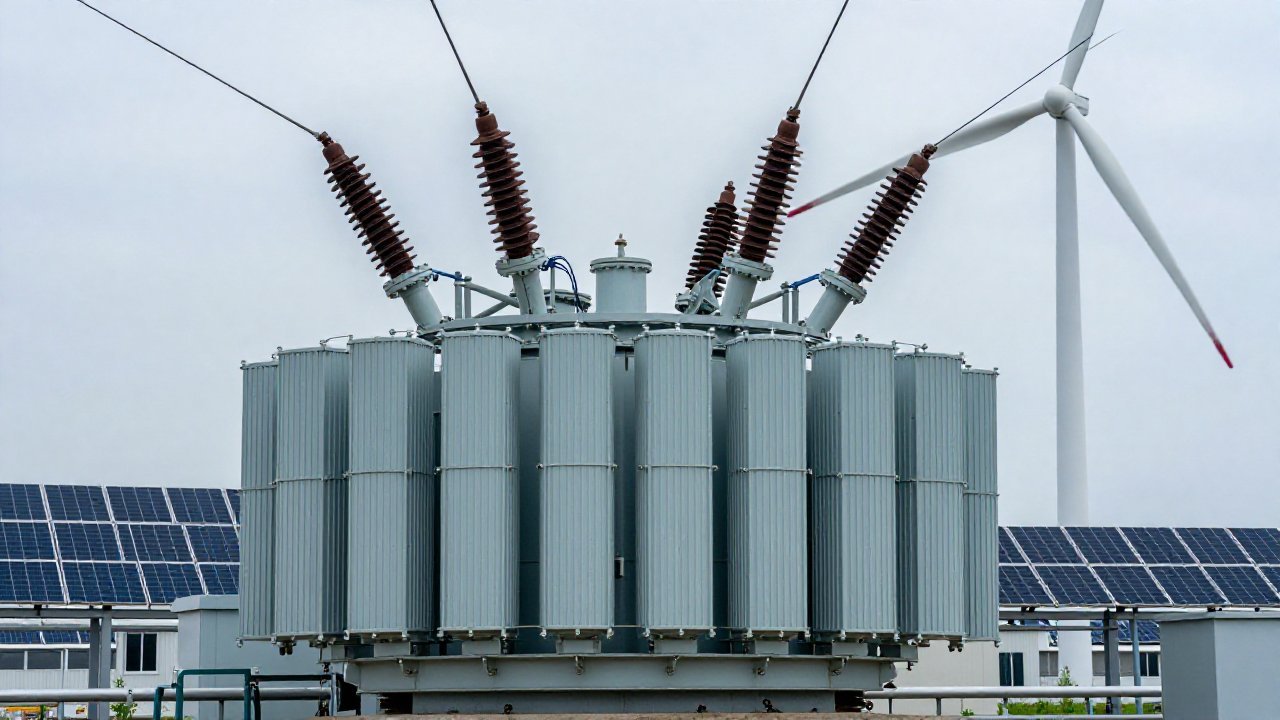
Offshore wind farms represent the most demanding environment for transformer monitoring — and the highest-stakes application. A transformer failure on an offshore platform can mean months of downtime waiting for weather windows, crane vessel availability, and replacement equipment delivery.
Unique Offshore Challenges
No maintenance access: Offshore platforms are unmanned or minimally manned. Every maintenance visit requires crew vessel or helicopter transport — costing €2,000-8,000 per visit — and is entirely weather-dependent. A monitoring system that requires any routine maintenance is operationally non-viable offshore.
No communication infrastructure: Running fiber optic cable to an offshore platform 12+ km from shore costs €50,000+ per platform. Any monitoring system must either use wireless communication or store data locally for manual retrieval (defeating the purpose of online monitoring).
Salt-spray corrosion: The marine environment accelerates corrosion of enclosures, connectors, and exposed components. IP66 or higher ingress protection is mandatory. Stainless steel enclosures and gold-plated connectors are strongly recommended.
Variable loading: Wind turbine transformers experience load variations from near-zero to 100% rated power within minutes as wind speed changes. This frequent thermal cycling accelerates insulation aging and creates gas patterns that differ from baseload transformers.
Inverter harmonics: Modern wind turbines use power electronic converters that inject harmonic currents into the transformer. These harmonics cause additional heating beyond fundamental-frequency load current — a phenomenon that traditional DGA interpretation (developed for sinusoidal 50/60 Hz applications) may not fully capture.
The DGA-200 Solution
The PAS DGA DGA-200 was specifically designed for these challenges. Pd alloy thin-film H₂ sensor with zero consumables, zero maintenance, and a 10-year expected life — no offshore visits needed. The DGA-200 transmits over a single RS-485 run to the platform communication mast. IP66 enclosure with marine-grade stainless steel hardware. MODBUS TCP for direct SCADA integration.
Proven Results
An offshore wind operator deployed DGA-200 on 22 platform transformers 12 km offshore. After 3+ years: zero maintenance visits required, 60% cost reduction vs. cable-based monitoring (€0 communication infrastructure cost), fleet-wide hydrogen trending from the onshore control center, real-time alerts for any H₂ deviation exceeding 5 ppm/day, and early identification of two transformers with abnormal H₂ trends — investigated and resolved during scheduled maintenance windows.