
DGA Products — Online Monitors & Hydrogen Sensors
Complete dissolved gas analysis solutions for transformer condition monitoring — from fleet-wide hydrogen sensors to comprehensive 9-gas Laser Photoacoustic Spectroscopy. Every order receives a personalized quotation, application review, and dedicated engineering support.
Key figures at a glance
- Multi-gas monitors measure on a cycle of 1 to 24 hours (default 4 hours) — up to 6 measurements per day with no operator involvement.
- Palladium-alloy hydrogen sensors hold ±15% of reading or ±5 ppm accuracy (DGA-200 and DGA-500; ±20% or ±2 ppm for the DGA-300) with no routine calibration.
- The laser photoacoustic (LPAS) detection cell has no consumables and its laser diode is rated for more than 50,000 hours of continuous operation.
Two Product Families, One Technology Platform
PAS DGA offers two complementary product families built on proprietary sensing physics — single-gas hydrogen monitors for cost-effective fleet coverage, and a laser photoacoustic multi-gas analyzer for compliance-grade protection of critical assets. Both families share the same MODBUS RTU (RS-485) / 4–20 mA interface and the same zero-consumable service philosophy, so a utility can standardize on one platform while matching each transformer’s risk profile to the right sensor class. Hydrogen sensors are the economical early-warning layer; the DGA-900 delivers full gas speciation when a fault’s exact nature matters.
 3 Models
Hydrogen Sensors
Pd Alloy Thin-Film — DGA-200 / 300 / 500 Series
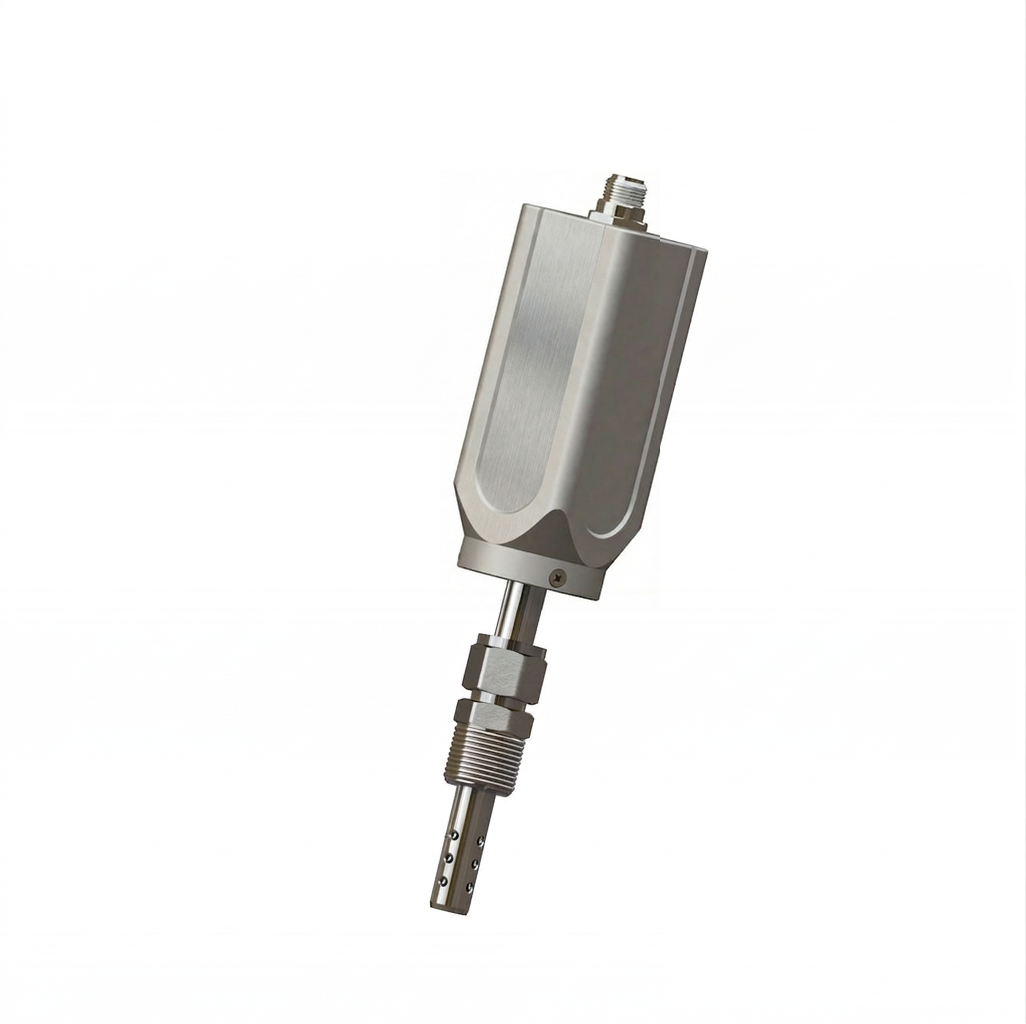
Online hydrogen monitoring built on a palladium alloy thin film that sits directly in the transformer oil — no carrier gas, no membrane to clog, no permeation lag. Choose the embedded OEM sensor for multi-gas DGA systems (DGA-300, 2 ppm detection limit), the standalone sensor mounted at the transformer valve (DGA-500, 5–5,000 ppm), or the integrated monitoring unit that also measures moisture and oil temperature (DGA-200).
- 2 ppm Detection (DGA-300)
- 5–5,000 ppm Range
- RS-485 / MODBUS RTU
- 4–20 mA + relays (DGA-200 only)
- IP66 (DGA-200) / IP67
- 10-Year Sensor Life
- Zero Consumables
 Multi-Gas
DGA-900 — Multi-Gas DGA
Laser Photoacoustic Spectroscopy — 9 Gases + Moisture
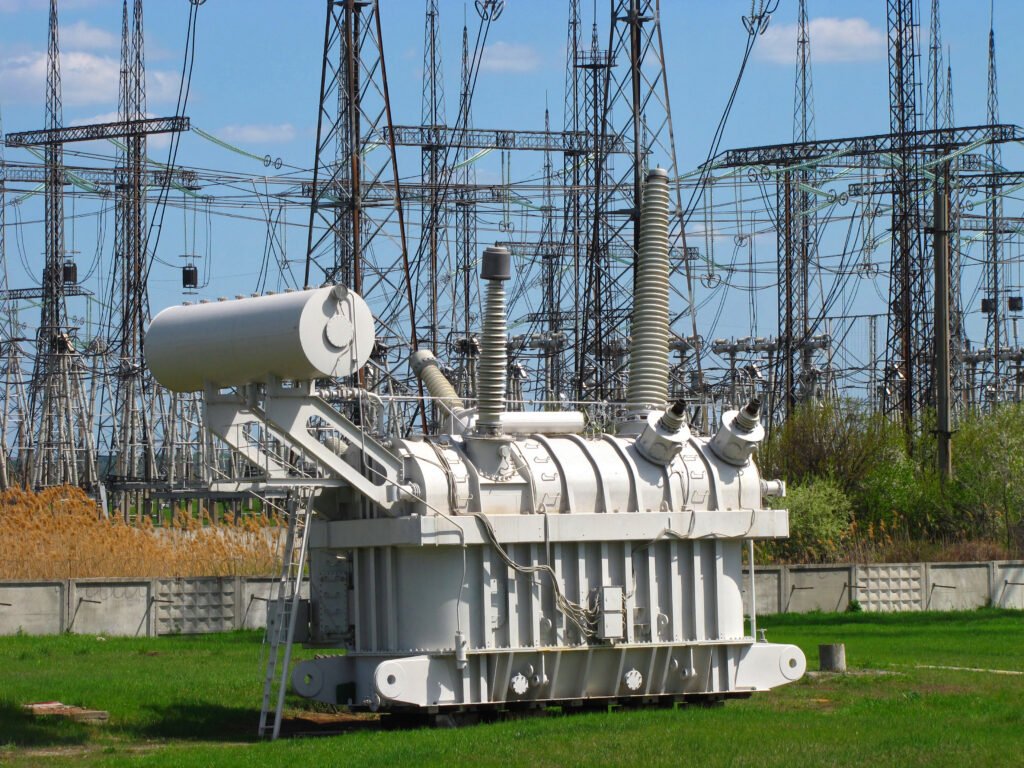
Laboratory-grade comprehensive DGA in real time. 9 fault gases plus moisture via Laser Photoacoustic Spectroscopy (LPAS). 0.1 ppm C₂H₂ detection. Deployed at China’s 1000 kV UHV substations and ±800 kV HVDC converter stations. Because LPAS measures absorbed light energy directly, the analyzer needs no carrier gas, no chromatography columns, and no routine calibration — only a three-year preventive maintenance cycle. Three configuration modes let you match price to criticality.
- 9 Gases + Moisture
- 0.1 ppm C₂H₂
- IEC 61850 + MODBUS
- Duval / Rogers / Doernenburg
- 72-Hour Early Warning
- Comprehensive Warranty
New — DGA-700 Compact Multi-Gas DGA Monitor
H₂ + CO + moisture-in-oil in a lightweight 10 kg valve-mount package, with optional acetylene (C₂H₂). Photoacoustic spectroscopy, 10-minute measurement cycle, IP55, IEC 61850 / Modbus. The cost-effective multi-gas layer between single-gas hydrogen sensors and the 9-gas DGA-900.
New — TPD-400 Transformer Partial Discharge (PD) Monitoring
Multi-sensor on-line PD monitoring for 110 kV+ oil-immersed transformers — UHF (300–1500 MHz), RF, AE and HF (HFCT) in one system. 5 pC sensitivity, 600 kV flashover withstand, 125 MS/s·14-bit synchronous IED, PRPD/PRPS expert diagnostics. Installed live; pairs with DGA for combined transformer condition monitoring.
Hydrogen Sensor vs Multi-Gas DGA — At a Glance
| Specification | Hydrogen Sensor (DGA-200/300/500) | DGA-900 Multi-Gas |
|---|---|---|
| Gases measured | H₂ | H₂, CO, CO₂, CH₄, C₂H₂, C₂H₄, C₂H₆, O₂, N₂ + moisture |
| Detection limit | 2 ppm (DGA-300) / 5 ppm (DGA-500) | 0.1 ppm C₂H₂ / 0.5 ppm H₂ |
| Measurement principle | Pd alloy thin-film, direct immersion | Laser Photoacoustic Spectroscopy (LPAS) |
| Carrier gas / consumables | None | None |
| Communications | MODBUS RTU (RS-485); 4–20 mA on DGA-200 only | IEC 61850, MODBUS |
| Diagnostic methods | H₂ trending + rate of rise | Duval / Rogers / Doernenburg / IEC & IEEE ratios |
| Typical install | Valve-mount (DGA-500) or wall-mount at the sampling valve (DGA-200) | Valve or circulation loop, ~1 day |
| Best fit | Distribution & industrial fleets | Transmission, GSU, HVDC, nuclear |
Full datasheets, dimensional drawings, and site-survey checklists are provided with every quotation.
Which product fits your transformer fleet?
There is no single “best” DGA monitor — only the right sensor for a given asset’s criticality, fleet size, and budget. The three paths below cover the decisions most operators face.
Choose Hydrogen Sensors when…
…you monitor a large fleet of distribution and industrial transformers. Hydrogen is generated in every transformer fault type, so hydrogen trending provides the highest diagnostic value per dollar. Valve-mount installation, zero maintenance, and the lowest total cost of ownership.
Choose the DGA-900 when…
…you protect critical assets — transmission transformers (≥220 kV), generator step-up units, HVDC converter transformers, or nuclear facility transformers. Full gas speciation enables precise fault-type identification (thermal vs. electrical, oil vs. paper) for compliance-grade monitoring.
Start with H₂, migrate to multi-gas…
…as a risk profile evolves. Many utilities roll out hydrogen sensors fleet-wide first, then upgrade critical units to the DGA-900. Both families report into the same SCADA/EMS workflow, so a staged migration requires no change to your data pipeline.
Technology Highlights
Palladium Alloy Thin-Film
Our hydrogen sensors use a proprietary palladium-alloy thin film that is immersed directly in the transformer oil — no membranes, no carrier gas, no permeation lag. The film’s electrical resistance changes reversibly with dissolved hydrogen concentration, giving a 2 ppm detection limit on the DGA-300 and a 10-year service life.
Laser Photoacoustic Spectroscopy
The DGA-900 uses a tunable quantum-cascade laser and a resonant photoacoustic cell to measure 9 fault gases plus moisture in real time. Because LPAS measures absorbed light energy rather than a secondary carrier gas, it needs no columns and no consumables — while reaching 0.1 ppm acetylene detection.
Zero-Consumables, Zero-Carrier-Gas Architecture
Both families share the same operational philosophy: no calibration gases, no spare-part kits, no maintenance windows for membrane replacement. The result is a 10-year total cost of ownership far below traditional GC-based online analyzers — see our 10-year TCO comparison for the figures.
Applications
Power Utilities
Transmission, distribution, and substation transformers — from 110 kV to 1000 kV UHV.
Industrial & Commercial
Steel, petrochemical, cement, mining, and data-center main transformers.
Renewables
Wind, solar, and hydro station transformers — including offshore platforms.
Critical Infrastructure
Nuclear plant transformers, HVDC converter stations, generator step-up units.
Quick Inquiry
Not sure which product you need? Tell us about your application and our team will respond within 1 business day.
Explore DGA Technology & Applications
DGA-900 Multi-Gas Monitor
DGA Monitor Product Selector
Accessories & Mounting Kits
How PAS Works
Pd Thin-Film Sensor Technology
Hydrogen vs Multi-Gas DGA
Online vs Offline DGA
DGA Fundamentals
DGA Diagnostic Methods
Power Utility Applications
Industrial Applications
H₂ Sensors & the 2026 Compliance Rule
DGA Sensor Technologies Compared
7-Dimension Selection Framework
Hydrogen Early-Warning Guide
10-Year TCO Comparison
1000 kV UHV Monitoring
Image credits: Wikimedia Commons (CC BY-SA) — placeholder photography. Product photographs and detailed specifications available on request.
How to choose the right DGA monitor for your transformer
- Step 1: Decide the gas coverage — hydrogen-only monitors give low-cost early warning; multi-gas monitors identify fault type and severity.
- Step 2: Match the measurement cycle to the risk — intervals range from 10 minutes (fast-developing faults) up to 24 hours (default 4 hours).
- Step 3: Confirm the installation — monitors mount on the transformer sampling valve with a universal adapter (DN15–DN32); no carrier gas is required.
- Step 4: Check integration — confirm the model’s interface (MODBUS RTU / RS-485 and 4–20 mA are standard) matches your SCADA or DCS.
- Step 5: Balance budget and enclosure — compare compact valve-mount units with full multi-gas systems and their IP ratings.
FAQ
Q: What gases does a DGA monitor detect?
A: The DGA-900 detects 9 fault gases plus moisture: hydrogen (H₂), carbon monoxide (CO), carbon dioxide (CO₂), methane (CH₄), ethane (C₂H₆), ethylene (C₂H₄), acetylene (C₂H₂), oxygen (O₂), nitrogen (N₂), and moisture (H₂O). The DGA-200/300/500 hydrogen sensors detect H₂ down to 2 ppm.
Q: How often should DGA monitoring be performed?
A: IEC and IEEE standards recommend: (1) Critical transformers (GSU, >200 MVA, >220 kV): continuous online monitoring with hourly measurements; (2) Transmission transformers (66–220 kV): annual offline DGA minimum, online recommended; (3) Distribution transformers (