
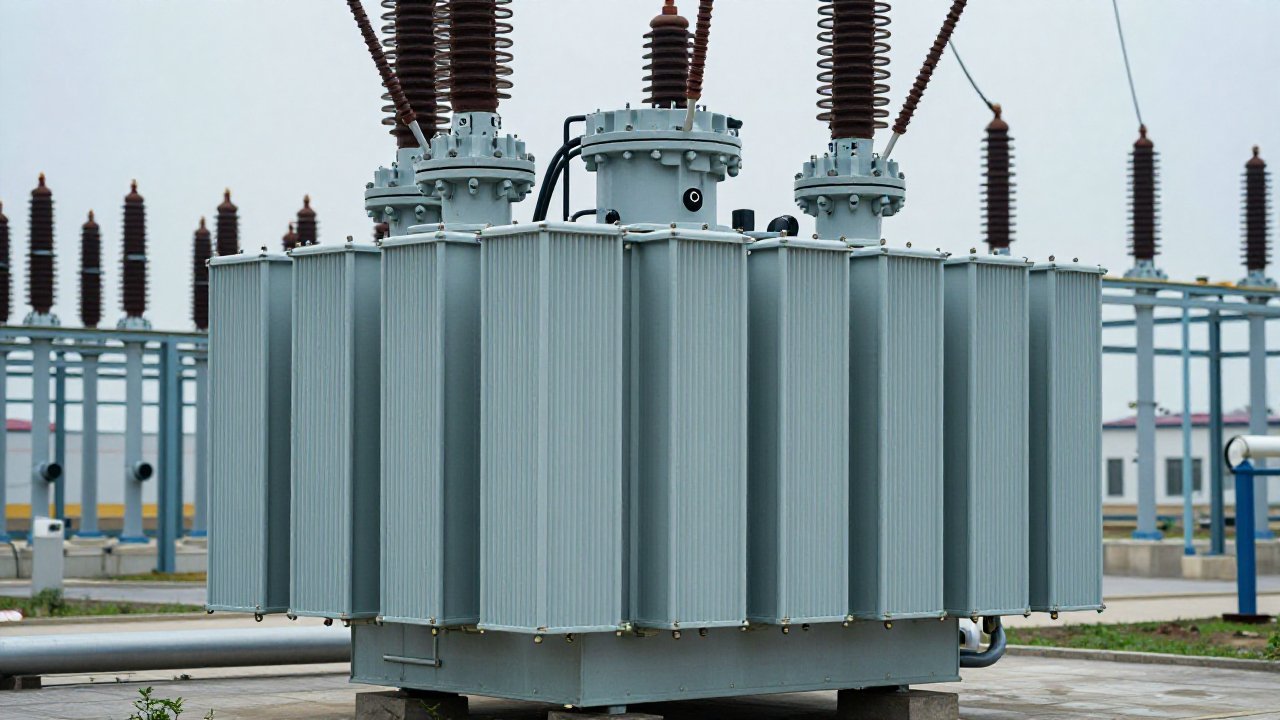
Bottom line first: When choosing an online DGA, on-paper specifications are only the entry ticket — 15-year total cost of ownership (TCO) and long-term reliability are what decide. On that point, even the international authority CIGRE has poured a bucket of cold water: online DGA device life is typically only a quarter of the transformer’s life.
This article cites third-party authoritative reports and public technical common knowledge only. It names no manufacturer and offers no subjective evaluation.
1. Start with the route, not the brand
The long-term maintainability of online DGA is set mainly by technical route, not by brand. Grouped by whether something is continuously consumed during operation, there are four routes:
| Route | Typical principle | Ongoing input during operation |
|---|---|---|
| Gas chromatography (GC) | Carrier gas + column separation | Carrier gas, span-gas cylinders, carrier-loop maintenance |
| Membrane / electrochemical | Selective membrane permeation + electrochemical / thermal-conductivity detection | Membrane, electrolyte, pumps and valves |
| Optical (with moving parts) | Infrared / laser absorption | Some designs include choppers or filter wheels — mechanical wear |
| Pure solid-state | Solid-state hydrogen-sensitive element, directly oil-immersed | No carrier gas, no membrane, no electrolyte; usually calibration-free |
The key point: the longer the consumables list and the more moving parts, the higher the 15-year “below-the-waterline” cost. This is not one vendor’s weakness — it is decided by the route.
2. A third-party voice: CIGRE TB409
CIGRE (the International Council on Large Electric Systems) is a widely recognized third-party authority. Its TB409 report contains several judgments of real value to procurement:
- “The life of an online DGA device is at most half the transformer’s, and typically only 25%.”
- “Solid-state hydrogen sensors are relatively imprecise.”
- “Online DGA cannot truly be calibrated”, while diagnosis often needs accuracy of ≥15%.
- Around the H₂ threshold of 100 ppm, stray gases cause false alarms (about 25% of cases).
This is not aimed at any one vendor — it is a shared weakness of the whole industry. Buyers should use it to demand long-term field data from suppliers, not just a new-unit demo.
On point 2: it is a reminder that “solid-state” is a broad category. Different solid-state principles (alloy-resistive, optical, catalytic …) differ widely in accuracy. Do not treat “solid-state” as a single metric at procurement — evaluate it by specific principle and measured accuracy.
3. 15-year TCO: the iceberg is below the waterline
The purchase price is only the tip of the iceberg. The real cost is beneath it: consumables, spares, calibration, software, downtime.
We suggest a 15-year TCO framework, asking each supplier to list, across three bands — 0–5 / 5–10 / 10–15 years — separately:
- Consumables (carrier gas, span gas, membranes, pumps, electrolyte …)
- Spare parts
- Calibration
- Software / licensing
The routes differ enormously on this table (matching the four routes above):
| Route | Main 15-year consumables | Maintenance character |
|---|---|---|
| GC | Carrier gas + span-gas cylinders | Continuous consumables; many field failure codes |
| Membrane / electrochemical | Membrane, electrolyte | Membrane wetting, limited life |
| Optical (with moving parts) | Choppers / filter wheels and other moving parts | Mechanical wear |
| Pure solid-state | None | Calibration-free, consumable-free |
Selection action: put the “15-year consumables list” into the tender and have every bidder fill in the same table — the below-the-waterline cost surfaces immediately.
4. The buyer’s three questions
- Do you have verifiable, model-specific data for your installed base and MTBF?
- In a 15-year TCO, how much is spent in 0–5, 5–10 and 10–15 years? (Require the table.)
- Where is your long-term field data (≥5 years)? (CIGRE says the industry broadly “cannot truly calibrate” — field data speaks.)
Third-party criteria cited from public reports such as CIGRE TB409; the route classification is technical common knowledge. This article contains no manufacturer names and no subjective evaluation of any manufacturer.
William Xiong — Shenzhen Feso Automation Technology Co., Ltd (PAS DGA) · DGA-500 pure solid-state palladium-alloy dissolved-hydrogen sensor: no membrane, no carrier gas, calibration-free
inquiry@pasdga.com · https://pasdga.com
To discuss how to structure a 15-year TCO comparison, we welcome the conversation.