
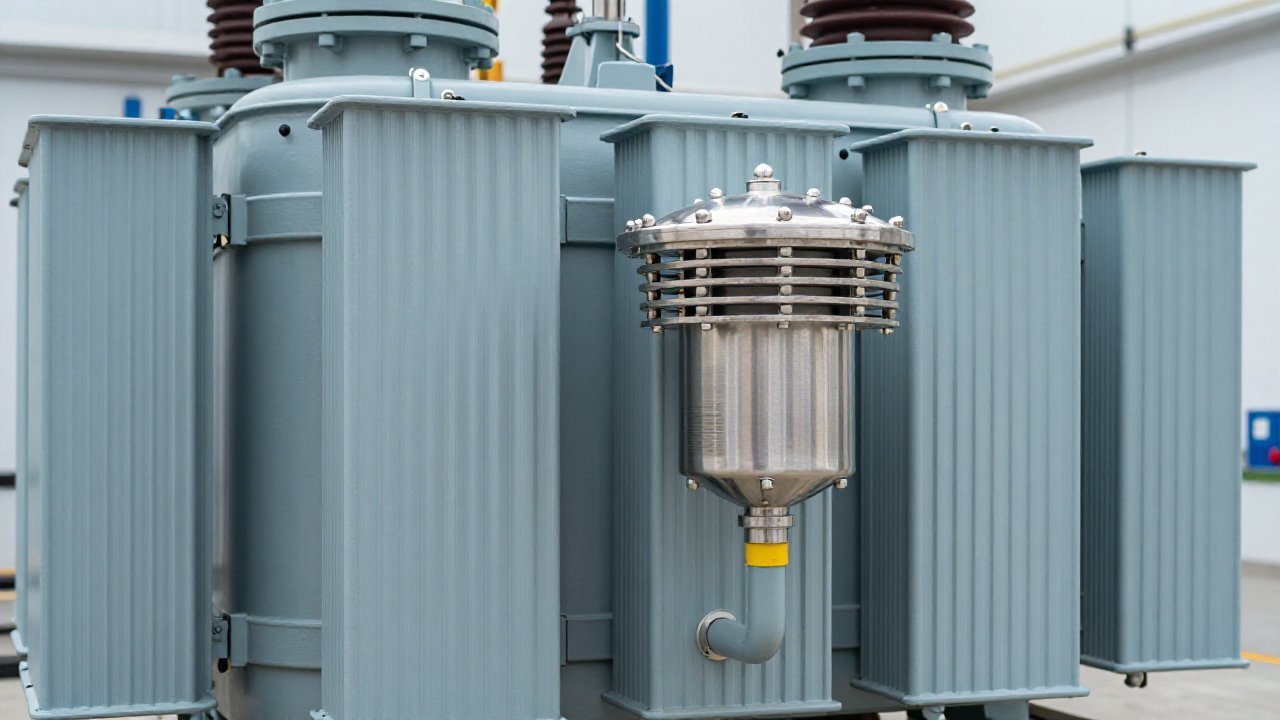
Bottom line first: Because infrared light cannot see hydrogen. The mainstream optical routes — photoacoustic (PAS), NDIR, FTIR and TDLAS — fail physically on H₂, O₂ and N₂, none of which absorb infrared. Yet almost every 9-gas online DGA on the market claims to measure H₂. So where does its hydrogen number come from?
The answer: a separate, non-optical sensor. And that is the key to understanding how a hydrogen channel should be selected.
1. The physics: why infrared cannot measure H₂
Infrared absorption requires a molecule with a permanent dipole moment — opposite ends carrying different charge.
- H₂ is a homonuclear diatomic molecule: two symmetric hydrogen atoms, zero dipole moment, so it does not absorb infrared light.
- N₂ and O₂ are the same.
- CH₄, C₂H₂, C₂H₄, CO and CO₂, by contrast, are heteronuclear or asymmetric and do absorb infrared — which is exactly why they are the home turf of photoacoustic and infrared instruments.
Conclusion: any instrument that claims to measure hydrogen “by photoacoustic or infrared” is not physically sound. The hydrogen it reports must come from another sensor.
2. A closer look: what mainstream 9-gas monitors use for H₂
| Model | What the optical path measures | How H₂ is measured | Source |
|---|---|---|---|
| Vaisala OPT100 | NDIR: 4 hydrocarbons + CO + CO₂ | Oil-immersed solid-state sensor | Manufacturer technical description |
| Siemens SITRAM Multisense 9 | NDIR: 4 hydrocarbons + CO + CO₂ | Microelectronic sensor | Manufacturer brochure |
| MR MSENSE DGA 9 | NIR | Supplied separately | Manufacturer brochure |
| GE Kelman DGA 900 / TRANSFIX | PAS: CH₄ / C₂H₄ / C₂H₂ / CO | SnO₂ electrochemical | Manufacturer datasheet |
| Doble Calisto R9 | DIPAS (differential infrared photoacoustic) | Thermal conductivity (TCD) | Manufacturer datasheet |
See the pattern? The optical camp handles the carbon-based gases; hydrogen is always supplied separately — solid-state, electrochemical or thermal conductivity.
3. What this means: the H₂ channel is the dividing line
If everyone has to add a separate device, then the quality of that add-on decides the quality of the unit’s hydrogen data.
Hydrogen sensors fall into roughly three routes:
| Route | Examples | Characteristics |
|---|---|---|
| Palladium (Pd) alloy thin film | H2scan, CoreSense, PAS DGA-500 | Directly oil-immersed, no degassing, no calibration, long life |
| Electrochemical / fuel cell | GE Hydran | Fast response (t90 ≈ 10 min), but the membrane and electrolyte are consumables |
| Thermal conductivity (TCD) | Calisto R9 | Simple construction, low sensitivity |
What sets the palladium-alloy route apart: hydrogen molecules dissolve directly into the palladium lattice and change the film’s resistance, with no need to drive hydrogen out of the oil — no degassing, no carrier gas, no span gas.
For an optical multi-gas monitor, this palladium module is not an “accessory”. It is the lifeline that determines whether the unit can measure hydrogen accurately.
4. A selection framework
When buying a 9-gas DGA, don’t just count the gases. Ask three questions:
- What type of sensor is the hydrogen channel? (Palladium alloy / electrochemical / thermal conductivity — this directly determines life and accuracy.)
- What are the hydrogen range and accuracy? 25 ppm or 5 ppm? ±20% or ±15%?
- Does the hydrogen channel need consumables? Electrochemical needs replacement membranes and electrolyte; palladium alloy is maintenance-free.
“9-gas” is standard across the industry, but the quality of the hydrogen channel varies widely — and that is where the real difference between instruments lies.
The physics and teardown above are based on each manufacturer’s public datasheets and technical descriptions. The infrared-inactivity argument is a textbook-level result.
William Xiong — Shenzhen Feso Automation Technology Co., Ltd (PAS DGA) · DGA-500 palladium-alloy dissolved-hydrogen sensor: measurement from 5 ppm, ±15% accuracy, directly oil-immersed, no degassing, no carrier gas
inquiry@pasdga.com · https://pasdga.com
To discuss hydrogen-channel selection for a specific project, or learn more about the PAS DGA-500, we welcome the conversation.