
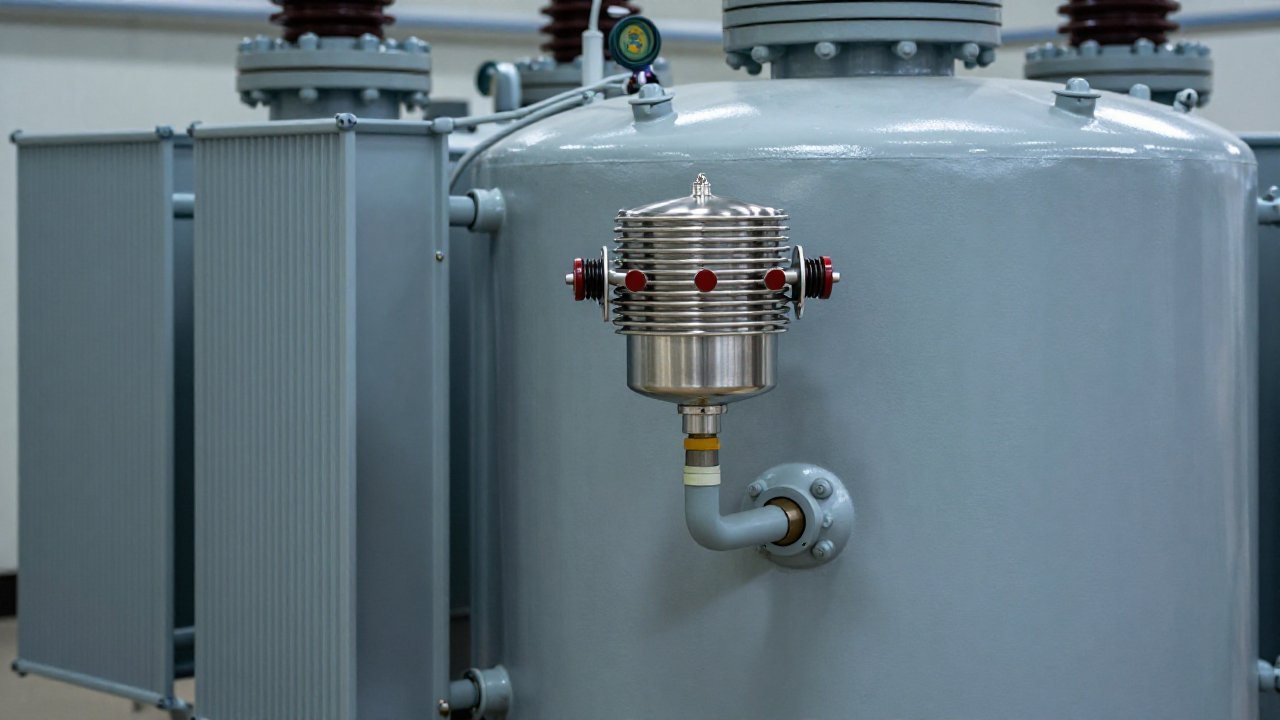
Why Hydrogen Matters
Hydrogen (H₂) is produced at relatively low temperatures in almost all transformer fault types — from partial discharge to thermal faults. It serves as the universal early warning indicator for transformer health.
Key Hydrogen Generation Mechanisms
1. Partial Discharge (150-300°C)
Corona discharge in gas-filled voids breaks down hydrocarbon bonds, producing primarily hydrogen. This is typically the earliest detectable fault.
2. Thermal Faults (300-700°C)
As temperatures rise, hydrogen production accelerates alongside methane (CH₄) and ethane (C₂H₆). The ratio of these gases provides diagnostic insight.
3. Arcing (>1000°C)
High-energy arcing produces acetylene (C₂H₂) as the signature gas, but hydrogen remains the dominant component by volume.
The PAS DGA Advantage
Our DGA-200 monitor uses palladium-nickel (Pd-Ni) alloy thin-film sensor technology to detect hydrogen down to 2 ppm with zero carrier gas requirements. Unlike traditional gas chromatography, you get:
- Continuous monitoring — not periodic lab samples
- 4-20 mA / Modbus output — integrate with any SCADA
- No consumables — no carrier gas, no calibration gas, no column replacement
- 10-year expected sensor life — solid-state, no electrolyte to deplete
When to Act
| H₂ Level | Condition | Recommended Action |
|———-|———–|——————-|
| < 50 ppm | Normal operation | Continue monitoring |
| 50-200 ppm | Elevated — investigate | Increase sampling frequency |
| 200-1000 ppm | Abnormal — schedule inspection | Perform DGA lab test, check load history |
| > 1000 ppm | Critical — immediate action | Plan outage, comprehensive DGA |